Led Lighting has moved from a simple energy-saving choice to a core part of commercial and industrial planning. The International Energy Agency’s Energy Efficiency 2017 report estimated that lighting used about 15% of global electricity and produced roughly 5% of global greenhouse gas emissions. Those figures are broad, older estimates, not a forecast for every market. Still, they show why buyers examine performance beyond the purchase price.
Choosing a supplier means checking real product details. A warehouse aisle needs even illumination, dependable drivers, and fittings that tolerate heat and dust. A hotel lobby may need warm color temperatures and smooth dimming. Ask for photometric files, warranty terms, efficacy data, and evidence of independent testing. Small omissions matter.
UN Environment Programme’s United for Efficiency initiative also provides guidance on energy-efficient lighting policies and product performance. Its work helps buyers understand why specifications and verification matter, especially when comparing suppliers across regions. Yet a certificate alone does not guarantee that a product suits a particular site. That part takes judgment.
This guide introduces leading LED lighting suppliers for global buyers, with attention to product range, manufacturing capability, quality systems, and export experience. Supplier claims deserve careful review. Some information can be difficult to compare, and public data may not tell the full story. Buyers should confirm technical documents, sample performance, lead times, and after-sales support before committing to large orders. A reliable shortlist starts with evidence, not polished brochures.

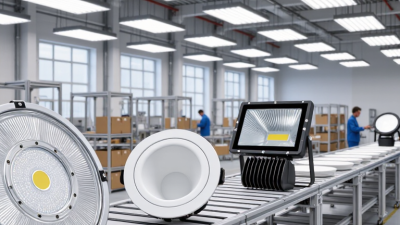
LED lighting suppliers usually organize products by setting and performance. Indoor ranges may include panel lights, downlights, linear fixtures, and high-bay luminaires. Outdoor catalogs often cover street, area, and flood lighting, with attention to weather resistance and mounting. Some suppliers also offer task lighting or horticultural fixtures. Details matter. Buyers should compare light output, color temperature, beam angle, dimming options, and expected service life—not just wattage.
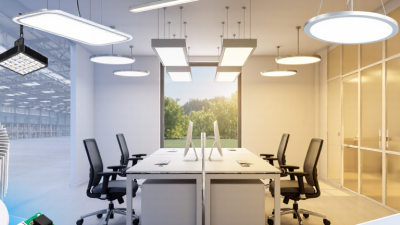
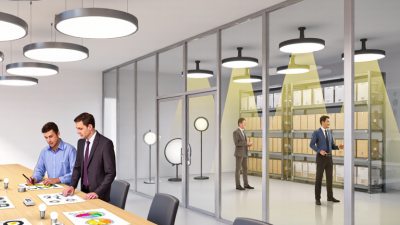
Buyer markets shape what suppliers need to provide. Offices and schools often prioritize comfortable, even illumination and straightforward controls. Warehouses may need high-bay fixtures, clear aisle coverage, and dependable operation across long shifts. Municipal and infrastructure buyers tend to examine outdoor durability, maintenance access, and photometric data. Project requirements vary widely. A specification that works in a small retail space may be unsuitable for a tall factory.
For global sourcing, ask for test reports, product datasheets, sample availability, packaging details, and clear production timelines. Confirm that listed performance applies to the exact model being quoted; similar-looking fixtures can use different drivers or optics. Local installation conditions also matter, including ceiling height, ambient temperature, and control compatibility. Even experienced buyers can overlook one detail. Rechecking the sample against the final specification is worthwhile, though it can slow purchasing.
For global buyers, LED efficacy of 100–200 lumens per watt offers a useful comparison point. Higher efficacy can reduce energy use for a given light output, but the number alone does not tell the whole story. Check whether it describes the complete luminaire or only the LED component. Optics, drivers, and heat management all affect delivered performance. A fixture rated near 150 lm/W may suit a warehouse aisle, while a different beam pattern may matter more in a retail display.
A stated life of 25,000–50,000 hours can help estimate maintenance needs. Ask how life was measured and whether the figure means expected operation before output falls to a specified level. Heat, dust, switching frequency, and installation conditions can shorten service life. Look for test reports, warranty terms, and clear operating limits. The comparison is useful, but not perfect. Real sites rarely match laboratory conditions exactly.
Tips: Compare efficacy at the required light level, not just the maximum rating. Request photometric data and check uniformity on the floor or work surface. Confirm the rated lifetime applies to the full fixture, including its driver. If data is missing, pause and ask for it.
Global buyers should treat CRI, LM-80, and IEC 60598 as separate checks, not interchangeable badges. A CRI of at least 80 is a useful baseline for many offices, corridors, and retail areas. It does not guarantee natural color in every setting. Not a guarantee. Compare product data with the actual room, especially where textiles, food, or skin tones matter. A sample can look fine under showroom light, yet appear different beside daylight or warm wall finishes.
Ask suppliers for LM-80 reports tied to the exact LED package or module used in the fixture. Check test duration, drive current, and temperature; these details shape what the results mean. LM-80 measures light-source lumen maintenance, not the complete luminaire. That distinction is easy to overlook. Do not treat the report as a direct promise of years in service. Operating conditions and thermal design still matter, and they can vary between installations.
For IEC 60598, request the applicable test documentation and confirm that the model and configuration match your order. Inspect markings, wiring, grounding, insulation, and enclosure details against the supplied records. Compliance evidence should be traceable, current, and tied to the relevant product version. Paperwork can be tidy while a small production change goes undocumented. Worth a second look.
| Supplier profile | Typical product focus | CRI quality check | LM-80 evidence to request | IEC 60598 compliance check | Buyer verification notes |
|---|---|---|---|---|---|
| General indoor luminaire supplier | Downlights, panels, linear fixtures, and surface-mounted luminaires | Specify CRI ≥80 for applicable general-lighting products; verify the reported value and test conditions on the product datasheet or test report. | Request LM-80 reports for the LED packages, arrays, or modules used. Check that the tested component and operating conditions correspond to the supplied product; LM-80 is not a luminaire lifetime test. | Request a test report covering IEC 60598-1 and the applicable IEC 60598-2 particular requirements for the luminaire type. | Match the report’s model, construction, ratings, and critical components to the purchase specification. Check whether destination-market requirements also apply. |
| Outdoor and area-lighting supplier | Roadway, floodlight, canopy, and other outdoor luminaires | Set CRI ≥80 when required by the project; confirm the specified CCT and photometric data separately. | Review LM-80 data for the LED light source and any related lifetime projection. Where TM-21 calculations are supplied, check the source data, junction-temperature assumptions, and projection limits. | Verify IEC 60598-1 and the relevant IEC 60598-2 requirements for the product category. Review the report scope and any stated environmental or installation limits. | Separately assess ingress protection, corrosion resistance, thermal performance, surge protection, and local road-lighting requirements where relevant. |
| Industrial high-bay supplier | High-bay, low-bay, and industrial task luminaires | Use CRI ≥80 as a screening target when suitable for the application; verify project-specific color-quality needs. | Request applicable LM-80 reports and supporting lifetime calculations. Confirm that temperature and drive-current assumptions are relevant to the proposed operating conditions. | Check IEC 60598-1 and the applicable IEC 60598-2 part, with ratings and installation instructions appropriate to the intended use. | Review thermal test information, driver details, mounting method, and suitability for the site environment; do not treat an LED-source report as proof of complete-luminaire compliance. |
| Emergency-lighting supplier | Emergency luminaires and luminaires with emergency operating modes | Confirm CRI ≥80 if required for the normal-lighting function; assess emergency operation against its applicable performance requirements. | Request LM-80 documentation for the LED source where relevant, while assessing battery, driver, and emergency-operation performance separately. | Request the relevant IEC 60598 reports and confirm that emergency features are assessed against applicable additional standards and destination-market rules. | Verify rated emergency duration, testing method, battery details, indicator behavior, and the exact model configuration in the supporting documents. |
| Custom or project-based supplier | Made-to-order fixtures, integrated systems, or project-specific configurations | Put CRI ≥80 and any CCT or color-consistency requirements in the specification; verify production samples against it. | Confirm the exact LED source used in the final build and request matching LM-80 evidence; review any TM-21 projection as an estimate based on LM-80 data, not a guarantee. | Check that reports cover the final design, including relevant variations in housing, optics, driver, and electrical ratings. Request reassessment if changes affect compliance. | Use a signed specification, approved sample, change-control process, and pre-shipment inspection to link tested documentation to delivered goods. |
Note: Supplier profiles above are generic sourcing categories, not named companies or claims about specific suppliers. CRI ≥80 is a buyer screening criterion shown here; LM-80 applies to LED light sources, while IEC 60598 addresses luminaires. Confirm the applicable standard editions, product-specific requirements, and destination-market regulations for each order.
Global buyers comparing LED lighting suppliers should assess certifications, production capacity, and warranty terms separately. A certificate covers a defined product and test scope; it does not guarantee that every production batch matches the tested sample. Ask for current, model-specific reports, the issuing laboratory, and traceable batch records. Confirm that the documentation fits the destination market.
The IEA’s Energy Efficiency 2023 report estimates that LEDs made up about 50% of global lighting sales in 2022, compared with roughly 5% in 2013. That shift makes consistent product performance more important. Capacity is not output. Compare a factory’s stated monthly capacity with recent production records, shift schedules, and the line used for your order. A sample audit helps, though it cannot catch everything.
Warranty details deserve close reading. Compare coverage length, lumen-maintenance conditions, exclusions, claim evidence, and responsibility for shipping or replacement labor. U.S. Department of Energy guidance notes that LEDs use at least 75% less energy and can last up to 25 times longer than incandescent lighting, but actual service life depends on use and operating conditions. Paper matters. I would still inspect cartons from a live shipment; supplier checks can miss small, costly inconsistencies.
Comparing Suppliers: Certifications, Production Capacity, and Warranty Terms
This chart presents a suggested buyer-set evaluation weighting—not measured data from specific suppliers. Verify certifications against the requirements of your destination market, confirm production capacity with audited records, and compare warranty coverage in the written contract.
Global lighting procurement starts with the supply voltage, not the fixture photo. Confirm nominal voltage, frequency, and driver tolerance against the installation site; a 220–240 V product may not suit a 120 V circuit. In commercial buildings, controls matter too: check dimming protocol, emergency backup, and surge protection before ordering. The U.S. Department of Energy’s 2022 Solid-State Lighting R&D Opportunities report documents LED package efficacy above 200 lumens per watt in leading products. That figure is not a fixture guarantee; optics, heat, and driver losses reduce delivered performance.
Choose correlated color temperature (CCT) for the actual task. A warm 2700–3000 K often feels comfortable in hospitality spaces, while neutral white near 4000 K can help in workshops. Higher CCT is not automatically better. Ask for color consistency data, such as the permitted SDCM range, and request a sample under the room’s real finishes. Small details matter. A white wall can make the same lamp look cooler.
For wet or dusty locations, read the complete IP code under IEC 60529: IP65 indicates dust-tight protection and resistance to water jets, not immersion. Match that rating to the cleaning method and mounting position. Check local requirements for electrical safety certification, energy labels, electromagnetic compatibility, and control-system rules; these vary by market and product type. A paperwork gap can delay installation, even when the light performs well. Procurement teams sometimes overlook this until cartons arrive. That is an expensive lesson.