10 LED Lighting Buying Tips for Global Buyers

Buying Led Lighting globally is no longer a simple price comparison. It is a performance decision with long-term consequences. According to the International Energy Agency’s Energy Efficiency 2023 report, lighting represents roughly 15% of global electricity consumption. Small specification errors can therefore create large energy and maintenance costs.

The U.S. Department of Energy has repeatedly emphasized that LED products are not direct replacements for every traditional lamp. Lighting expert James Brodrick has warned that “LEDs are not a drop-in replacement for conventional light sources.” That caution matters. A lamp may fit the socket yet fail under local voltage, heat, humidity, or control-system conditions.

This guide introduces ten practical buying tips for global buyers. It examines efficacy, color temperature, color rendering, flicker, thermal management, driver quality, dimming, ingress protection, certifications, warranty terms, and total cost of ownership. The Lighting Facts and DesignLights Consortium programs also show why measured performance deserves more trust than impressive packaging claims. Look beyond lumens. Inspect test reports.

A warm 3000K lamp can suit a hotel lobby, while 5000K may feel harsh in a residence. A coastal warehouse may need stronger moisture protection than an inland office. These details are easy to overlook. The market is not perfectly transparent. Even experienced buyers can miss hidden driver limitations or unrealistic lifetime figures. Careful comparison remains essential. Good Led Lighting should perform reliably in the place where it is installed, not only in a brochure.
10 LED Lighting Buying Tips for Global Buyers

Define Lighting Needs, Applications, and Project Requirements

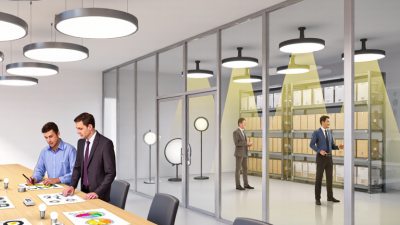
Before comparing LED prices, define what the space must accomplish. A warehouse aisle needs uniform visibility, while a hotel lobby needs comfort, color quality, and visual appeal. Write down room dimensions, mounting height, operating hours, target illuminance, and control preferences. Also record local voltage and climate conditions.

The International Energy Agency reported in 2022 that lighting represented about 10% of global electricity demand. That figure makes application planning commercially important. Choose lumens for the task, not watts alone. For offices, confirm glare limits and flicker performance. For retail, review color rendering and color temperature beside the actual merchandise. For outdoor areas, check beam distribution, wind exposure, corrosion resistance, and IP protection.

Do not ignore maintenance access. A high ceiling can make a cheap fixture expensive to service. The U.S. Department of Energy notes that quality LED products can use at least 75% less energy and last up to 25 times longer than incandescent lighting. However, lifetime claims depend on temperature, drivers, controls, and operating cycles. Ask for test reports, warranty terms, photometric files, and safety certifications. No specification is perfect. I have seen projects over-focus on efficiency and under-check visual comfort. That mistake can create complaints, rewiring, or early replacement. Use a small sample area before approving a large shipment. Test it at night.

Compare LED Types, Specifications, and Performance

10 LED Lighting Buying Tips for Global Buyers

Compare performance, not just wattage. Lumens measure light output, while watts measure energy input. A 100-watt fixture may perform poorly if its optics waste light. The U.S. Department of Energy reports that leading LED packages can exceed 200 lumens per watt in laboratory conditions. Real products often deliver less. Check the tested luminaire efficacy, not the package claim. It matters.

Tips: Compare lumens per watt, beam angle, color temperature, and color rendering index. Request LM-79 test reports for complete fixtures. Check LM-80 data when evaluating LED component lifetime. Confirm the rated lifetime, warranty terms, and operating temperature. A 50,000-hour claim needs context. It may assume cooler conditions than your installation site.

The IEA has identified efficient lighting as a major energy-saving opportunity, but efficiency alone cannot guarantee visual comfort. Choose 2700–3000K for hospitality spaces, 3500–4000K for offices, and higher color rendering where products need accurate appearance. Look for CRI 80 or above, then inspect R9 performance for saturated reds.

Flicker also deserves attention. IEC TR 61547-1 and accepted flicker measurements can support safer comparisons. Specifications can be incomplete. Ask questions. Evaluate glare, driver quality, dimming compatibility, voltage range, and replacement access before ordering.

Verify Product Quality, Certifications, and Supplier Reliability

When buying LED lighting internationally, verify performance before comparing prices. Request a recent test report for lumen output, color temperature, power consumption, and lifetime claims. Check whether an independent laboratory issued it. Product markings alone are not enough.

Tip: Ask for a production sample, not only a catalog sample. Run it for several hours and inspect heat, flicker, wiring, and surface finish. Compare the delivered sample with the approved specification. Small differences can reveal weak quality control. I once learned that attractive packaging cannot compensate for unstable brightness.

Certifications should match the destination market and product type. Confirm certificate numbers, issuing bodies, validity dates, and covered models. Check safety, electromagnetic compatibility, and restricted-material requirements where applicable. Documents may look official but still be outdated. A careful buyer should verify them through the issuing organization’s public records.

Tip: Evaluate the supplier as carefully as the lamp. Request factory photographs, quality procedures, inspection records, and clear warranty terms. Ask how defects are handled and how quickly replacement parts can be supplied. A reliable supplier answers specific questions consistently. Delayed replies are a warning sign, although busy periods can create exceptions. Consider a small trial order before committing to full-volume production. Keep written specifications, approved samples, and inspection results in one file. That habit prevents avoidable disputes.

Calculate Pricing, Shipping Costs, and Import Requirements

10 LED Lighting Buying Tips for Global Buyers

A low unit price can hide a high landed cost. Calculate the product price, packaging, inland delivery, ocean or air freight, insurance, and payment fees. A simple spreadsheet helps. For example, 500 lamps at $8 each cost $4,000 before shipping. Add carton measurements, not only product weight, because freight may use dimensional weight. Ask for carton length, width, height, and gross weight.

Import charges need careful checking. Confirm the correct customs classification for each LED product with a qualified customs broker. Duties and taxes may depend on wattage, application, origin, and declared value. Request commercial invoices, packing lists, certificates of origin, test reports, and required safety documents before payment. Import rules vary by destination. Do not rely on an old supplier quotation. Regulations and inspection practices can change. Check port fees, customs clearance charges, storage costs, and possible examination fees. These small items can damage a tight budget.

Shipping terms also change your responsibility. Compare delivered and port-based quotations clearly, then identify who pays freight, insurance, clearance, and local delivery. Order samples before placing a large purchase. Test brightness, color consistency, heat management, plug type, and packaging strength. A sample may perform well while bulk production differs, so include inspection criteria in the purchase contract. I would also reserve extra time for delays. That feels inefficient, but missed seasonal demand usually costs more. Keep a contingency allowance of 10% to 15%, though this figure may still be too low for remote destinations or unstable freight markets.

10 LED Lighting Buying Tips for Global Buyers - Calculate Pricing, Shipping Costs, and Import Requirements

No. Buying Tip Key Data to Check Illustrative Reference Data Cost / Compliance Calculation Buyer Action
1 Define the lighting specification before requesting prices Power, lumen output, efficacy, color temperature, beam angle, input voltage, dimming, IP rating and rated life. Commercial LED downlight: 18 W; 1,800 lm; 100 lm/W; 4,000 K; 100–240 V AC; IP44; 50,000-hour rated life. Estimated energy use: 18 W × 2,500 hours/year = 45 kWh per fixture annually. Request a signed technical datasheet and a pre-production sample.
2 Compare price by total delivered cost, not unit price alone Product price, packaging, inland transport, export fees, freight, insurance, duty, broker fees and destination taxes. 1,000 units at USD 8.40 each; export packing USD 0.25/unit; international freight USD 1,150; insurance USD 85; destination charges USD 320. Pre-duty landed cost = 8,400 + 250 + 1,150 + 85 + 320 = USD 10,205, or USD 10.21/unit. Use the same quantity, delivery term and destination for every quotation.
3 Select the correct Incoterm Who pays export clearance, main carriage, insurance, import clearance, duty and final delivery. FCA: buyer arranges main freight; CIF: seller arranges freight and insurance to the named port; DAP: seller delivers to the named place, while buyer normally handles import clearance and taxes. A lower FCA price can still produce a higher final cost if the buyer's freight, customs and delivery charges are not included. Write the Incoterm, named place and version, such as “DAP, buyer warehouse, Incoterms 2020.”
4 Calculate shipment volume and chargeable weight Carton dimensions, cartons per shipment, gross weight, pallet count and the carrier's volumetric divisor. 100 cartons; each carton 60 × 40 × 35 cm; gross weight 12 kg; total volume 8.40 m³; total gross weight 1,200 kg. Air-freight volumetric weight using divisor 6,000: 60 × 40 × 35 ÷ 6,000 = 14 kg/carton; chargeable weight is approximately 1,400 kg. Obtain the carrier's actual divisor and confirm whether rates use gross or volumetric weight.
5 Choose transport according to urgency and shipment size Transit time, port-to-port or door-to-door scope, fuel surcharges, peak-season fees and handling charges. For an 8.40 m³ shipment: ocean LCL may take about 25–45 days; air freight may take about 5–10 days but is generally much more expensive. Compare total logistics cost per unit and the financial cost of delayed inventory, not only the freight quotation. Use ocean freight for planned replenishment and air freight for urgent, high-value or lightweight orders.
6 Verify the tariff classification before importing Product construction, light source type, integrated driver, intended use and destination-country tariff schedule. LED lamps and LED luminaires may fall under different HS headings; common international headings include 8539.50 for certain LED lamps and 9405.11 or 9405.19 for certain luminaires. The final HS code and duty rate depend on the importing country's customs interpretation and the exact product design. Ask a customs broker or customs authority for a binding or written classification where available.
7 Estimate import duty and tax separately Customs value, duty rate, import VAT or sales tax, brokerage fees and tax recovery rules. Example customs value: USD 10,205; assumed duty rate: 6%; assumed import tax rate: 20% for planning only. Duty = 10,205 × 6% = USD 612.30. Taxable base may include customs value plus duty and certain fees: approximately 10,205 + 612.30 = USD 10,817.30; tax = about USD 2,163.46. Replace the example rates with official rates for the destination country and confirm whether tax is recoverable.
8 Check electrical safety and market-access requirements Safety, electromagnetic compatibility, photobiological safety, energy efficiency, radio functions and national marking requirements. Typical technical file: test reports, declaration of conformity, risk assessment, user instructions, wiring diagram, product label and traceability information. Requirements vary by destination and product type; wireless controls may create additional radio-equipment obligations. Confirm applicable standards with an accredited testing body before mass production.
9 Review packaging, recycling and environmental obligations Packaging materials, battery content, electrical-waste rules, restricted substances and producer-registration duties. A 1,000-unit order with 0.18 kg of packaging per unit creates approximately 180 kg of packaging material requiring local handling or reporting. Environmental fees and registration requirements depend on the destination market, product category and importer role. Confirm recycling symbols, material declarations and registration responsibilities before sale.
10 Protect quality, warranty and payment risk Inspection stage, defect limit, warranty period, spare parts, payment milestones and delivery acceptance criteria. Recommended control plan: sample approval before production; production inspection at 50–80%; final inspection before shipment; 24–36-month commercial warranty. If 2% of 1,000 units fail inspection, 20 units require replacement or credit. Include potential warranty cost in the landed-cost model. Use written specifications, an inspection report, a defined remedy process and payment terms linked to acceptance.
Planning note: Freight rates, duty rates, taxes, customs classifications and compliance requirements vary by product design, origin, destination and shipment date. Confirm current figures with the carrier, customs authority and an accredited compliance professional before placing an order.

Test Samples Before Finalizing a Scalable Purchase Plan

Global buyers should test LED lighting samples before approving a scalable purchase plan. A product image cannot reveal thermal behavior, flicker, or driver noise. Request samples from the intended production specification, not a showroom version.

Install each unit in a space similar to its final application. Measure illuminance at working height with a calibrated meter. Check color temperature, color rendering, power consumption, and beam distribution. Observe the lamp after eight hours of operation. Look for excessive heat, visible flicker, loose connectors, or a drifting color tone. Test dimming across the full range, especially at low output. Some units perform well at full brightness but become unstable below 20 percent.

Ask for safety documentation, photometric files, rated lifetime conditions, and warranty terms. Confirm the input voltage, frequency, surge protection, and operating temperature range. For outdoor projects, inspect seals and cable entries after repeated installation. Keep a written test record with photos and measurement dates. It helps compare suppliers fairly. It also exposes small differences between samples.

My first sample review once focused too heavily on brightness. I missed an awkward mounting clip that slowed installation. That mistake was expensive at scale. Repeat critical tests on several samples, because one perfect unit proves very little. Approve larger quantities only after the sample, documents, packaging, and production tolerances match the project requirements.

dLED: retail LED lighting
Privacy Overview

This website uses cookies so that we can provide you with the best user experience possible. Cookie information is stored in your browser and performs functions such as recognising you when you return to our website and helping our team to understand which sections of the website you find most interesting and useful.