How to Choose Low Power Lighting for Global Sourcing?
Choosing Low Power Lighting for global sourcing requires more than selecting the lowest wattage. A product may consume little electricity yet provide weak illumination, poor color accuracy, or disappointing service life. Experienced buyers compare lumens, beam angle, color temperature, driver quality, and expected operating hours. A 5-watt LED may suit a hotel corridor, but it may fail in a warehouse where higher brightness and wider coverage are necessary.
Supplier evaluation matters just as much. Request photometric reports, product samples, factory quality records, and clear warranty terms. Verify whether the supplier can support your target voltage, plug type, dimming method, and environmental conditions. Independent testing can confirm energy performance, heat management, ingress protection, and material consistency. Relevant regional conformity requirements should also be checked before purchase, because one certificate rarely covers every destination market. Small details matter. A missing test report can delay an entire shipment.
Cost should include freight, replacement rates, installation time, and energy consumption. A cheaper lamp is not always economical. For example, unstable drivers can cause flickering after months of use, creating complaints and maintenance costs. However, specifications do not tell the whole story. Samples may perform well while larger batches vary. This risk deserves honest attention. Use a pilot order, inspect production, and record real performance after installation. No checklist is perfect. Still, careful comparison, documented testing, and transparent supplier communication create a more reliable path toward practical Low Power Lighting decisions.
Define Low-Power Lighting Requirements and Application Goals
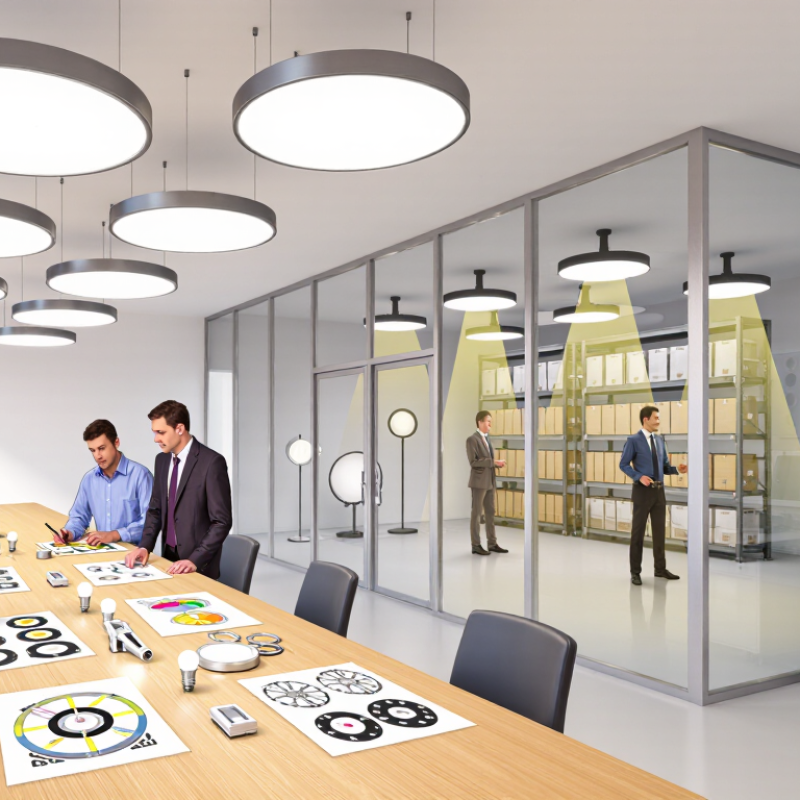
Choosing low-power lighting begins with defining the job, not selecting the lowest wattage. Record the target area, operating hours, task brightness, and control method. A packing table may need clearer light than a quiet corridor. Measure illuminance in lux at the working surface, then note glare, shadows, and color requirements. For product inspection, stable color rendering may matter more than small energy savings. For storage aisles, occupancy sensors can reduce runtime significantly.
Write a simple application brief before contacting suppliers. Include input voltage, frequency, ambient temperature, mounting height, duty cycle, dimming needs, ingress protection, and expected service life. In global sourcing, confirm regional electrical compatibility and required safety documentation. Ask for test reports, photometric data, and sample units. A sample can reveal flicker, heat, awkward wiring, or weak mounting hardware. A rough estimate is acceptable. Mark it as provisional. Early assumptions often fail when dust, cold rooms, or frequent switching appear.
Tips: Compare total energy use, not wattage alone. Calculate watts multiplied by operating hours and quantity. Test one real installation for several days. Check light levels during busy and quiet periods. Keep records of temperature, controls, and user feedback. If workers still add portable lamps, the original lighting goal was probably incomplete.
Compare Energy Efficiency, Brightness, and Lighting Performance
Low-power lighting should be compared by delivered light, not wattage alone. A 9-watt lamp may consume less energy, yet provide poor workplace visibility. Check lumens, lumens per watt, and measured output after warm-up. Brightness can deceive. A narrow beam may look intense while leaving work surfaces dim. Review beam angle, uniformity, glare, and useful lighting area before selecting products.
In a practical warehouse trial, a 12-watt fixture produced better results than a cheaper 8-watt model. Its light reached the floor evenly, and workers reported less eye strain during detailed tasks. Color temperature also affected performance. Neutral white light around 4000K supported clear visual work, while a higher color rendering index improved material and color recognition. The most efficient sample was not the strongest performer. That finding changed our evaluation sheet.
Reliable global sourcing requires more than supplier claims. Request independent test reports for power consumption, lumen maintenance, flicker, thermal behavior, and rated life. Test samples under the destination market’s voltage and operating temperature. A fixture that performs well in a cool showroom may lose brightness in a warm warehouse. Check dimming compatibility and installation conditions, too. Small differences matter. Compare several batches, because early samples can hide production variation. I still question long lifetime figures when testing methods are unclear. A transparent supplier should explain measurement conditions, tolerances, and quality controls without avoiding difficult questions.
How to Choose Low Power Lighting for Global Sourcing? - Compare Energy Efficiency, Brightness, and Lighting Performance
| Lighting Type |
Typical Power for Approximately 800 lm |
Typical Efficacy |
Brightness Output |
Typical Color Temperature |
Color Rendering (CRI) |
Rated Life |
Warm-Up / Dimming Performance |
Global Sourcing Considerations |
| LED Lamp |
8–10 W |
80–110 lm/W |
Approximately 700–900 lm; stable light output when properly thermally managed |
2,700–6,500 K |
80+ standard; 90+ for high-color-quality versions |
15,000–50,000 hours |
Instant start; dimming depends on driver and dimmer compatibility |
Best overall efficiency
Check driver quality, thermal design, photometric files, safety approvals, and voltage compatibility. |
| Compact Fluorescent Lamp |
13–15 W |
45–65 lm/W |
Approximately 700–900 lm; output may decrease in cold environments |
2,700–6,500 K |
80–85 |
6,000–15,000 hours |
May require warm-up time; dimming requires a compatible lamp and control gear |
Moderate efficiency
Consider mercury-content regulations, recycling requirements, ballast quality, and export restrictions. |
| Linear Fluorescent Lamp |
12–16 W for a compact 800 lm application |
70–100 lm/W |
Good uniformity with suitable reflectors; performance depends strongly on ballast and fixture design |
2,700–6,500 K |
75–90 |
15,000–30,000 hours |
Requires ballast; cold-start and dimming performance vary by system |
Suitable for commercial fixtures
Verify tube diameter, socket type, ballast compatibility, system wattage, and end-of-life requirements. |
| Halogen Lamp |
42–53 W |
15–20 lm/W |
Approximately 700–900 lm; consistent directional light |
2,700–3,000 K |
100 |
2,000–4,000 hours |
Instant start; generally easy to dim across a wide range |
High energy use
Use only where excellent color rendering, heat, or legacy dimming performance is essential. |
| Incandescent Lamp |
60 W |
12–15 lm/W |
Approximately 700–900 lm; light output declines as voltage differs from rated voltage |
2,700 K |
100 |
750–2,000 hours |
Instant start; simple and highly dimmable |
Lowest efficiency
Often restricted or discouraged by energy regulations; confirm destination-market requirements before sourcing. |
| LED Panel or Downlight |
9–15 W for approximately 800–1,200 lm |
70–120 lm/W |
Uniform area illumination; glare and visual comfort depend on diffuser, optics, and UGR design |
3,000–6,500 K |
80+ standard; 90+ for premium applications |
25,000–60,000 hours |
Instant start; dimming requires a compatible constant-current driver or control system |
Strong commercial option
Review beam angle, UGR, flicker, driver replacement, mounting dimensions, and emergency-lighting compatibility. |
Data notes: Values are representative industry ranges rather than brand-specific specifications. Actual performance varies with lamp design, operating temperature, driver or ballast, input voltage, optical efficiency, and testing method. Lumens measure total visible light output; watts measure electrical power consumption. For international sourcing, confirm the target market’s voltage and frequency, socket standard, photometric test report, energy label requirements, electrical safety certification, electromagnetic compatibility, RoHS requirements, and warranty terms.
Evaluate Product Quality, Safety Standards, and Certifications
Choosing low-power lighting globally requires more than comparing wattage and price. A 7-watt lamp may save energy, yet poor heat control can shorten its service life. Request production samples, not only catalog images. Inspect solder joints, housing seams, cable strain relief, and driver markings. Test brightness after continuous operation. Heat matters.
Safety evaluation should match the destination market and installation type. Check applicable electrical, photobiological, electromagnetic compatibility, and chemical requirements. Common references may include IEC or EN standards, but acceptance rules differ by country. Ask for current test reports from competent, accredited laboratories. Verify model numbers, test dates, factory addresses, and report scope. A certificate with the wrong model is a warning. Documentation can look polished and still be incomplete.
For global sourcing, build a traceable quality file for every shipment. Include incoming inspection records, LED and driver specifications, burn-in results, packaging checks, and corrective-action history. Confirm that production units match approved samples. Small changes can affect flicker, power factor, or insulation. Do not rely on one inspection. A factory may pass a sample review and fail later batches. That uncomfortable possibility deserves a sampling plan, independent testing, and clear rejection criteria. Reliable sourcing is careful, sometimes slower, and never perfectly certain.
How to Choose Low-Power Lighting for Global Sourcing
Compare representative luminous efficacy and rated life before reviewing electrical safety, photobiological safety, and market-specific certification requirements.
Product quality
Prioritize higher luminous efficacy, stable lumen output, thermal management, color consistency, and a documented rated life.
Safety standards
Check applicable IEC 60598 requirements for luminaires, IEC 61347 requirements for controlgear, and IEC 62471 photobiological safety assessment.
Global compliance
Confirm destination-market requirements such as electrical conformity marks, RoHS restrictions, EMC testing, and energy-efficiency labeling.
Indicative technology-level values based on commonly published ranges from the U.S. Department of Energy solid-state lighting and general lighting references. Actual performance varies by design, operating temperature, color temperature, driver, and test method.
Assess Suppliers, Costs, Minimum Orders, and Global Logistics
How to Choose Low Power Lighting for Global Sourcing?
A reliable supplier should provide more than attractive product photos. Ask for recent test reports, measured wattage, lumen output, color consistency, and thermal performance. Request samples from different production batches, not only showroom units. Compare wiring, housing thickness, connector quality, and dimming behavior under continuous use. Ask for evidence. A factory visit or live video inspection can reveal process discipline, but neither guarantees perfect quality.
Cost analysis should include more than the unit quotation. Add tooling, packaging, inspection, freight, insurance, duties, and possible replacement stock. A low price may hide fragile cartons or high defect rates. Confirm the minimum order quantity and ask whether mixed colors or sizes are allowed. Smaller trial orders reduce risk, although they may increase the per-unit cost. In my experience, suppliers sometimes promise flexible quantities before production, then change terms later. Put every agreement in writing.
Global logistics needs practical planning. Check carton dimensions, stackability, lead time, port options, and documentation before placing an order. Request a packing list with exact quantities and gross weights. Confirm the delivery term and who controls freight booking. For remote markets, spare drivers, connectors, and mounting parts can prevent expensive delays. Weather and customs inspections may extend schedules. Build a buffer. I once underestimated holiday congestion and treated the quoted transit time as fixed. That assumption was careless. Lighting projects also need local installation feedback, because a technically efficient product may still waste energy if poorly positioned or incompatible with existing controls.
Select, Test, and Scale the Best Lighting Solution
Global sourcing starts with a measurable lighting target, not a low purchase price. The International Energy Agency’s Energy Efficiency 2023 report estimates that lighting uses about 5% of global electricity demand. Efficient products can reduce operating costs, but efficiency claims need verification.
Select products by lumen output, efficacy, color rendering, beam angle, and expected life. I usually request samples from several suppliers and compare them in the same room. A 100 lm/W claim means little without test conditions. Check the full report. Include flicker, power factor, surge protection, thermal performance, and ingress protection. Test at different voltages and temperatures. Small details matter.
Tips:
Create a pass-or-fail checklist before sampling. Use an independent laboratory for safety and performance testing. Ask suppliers for traceable test reports, production tolerances, and replacement policies. A pilot order should cover different locations, ceiling heights, and daily operating hours. Record light levels after installation, not only in a factory.
Scale slowly. Approve a golden sample, then inspect batches against it. Use incoming checks for wattage, color temperature, connector quality, and packaging damage. The IEA also reports strong global LED adoption, yet market quality remains uneven. That is easy to forget. I have seen attractive samples fail after heat exposure or repeated switching. Cost matters, but field reliability protects the real budget. A second pilot may be wiser than a rushed global rollout.