
Who Are the Top LED Lighting Solutions Suppliers in China?
China’s LED market is broad, but a polished product page does not prove a supplier can deliver consistent lighting. Buyers need to look beyond price and compare product performance, factory capabilities, and after-sales support. Details matter: a warehouse high bay, a retail downlight, and an outdoor floodlight face very different operating conditions.
Lighting researcher Dr. Mark Rea has described light as “a powerful drug.” The phrase is a useful reminder: lighting affects people, not just rooms. For buyers, that means checking more than wattage. Ask for photometric files, efficacy data, color-rendering and color-temperature specifications, thermal-management details, and relevant test reports. Then confirm that the quoted product matches the sample and production order. Small differences can matter.
This guide examines leading suppliers of Led Lighting Solutions in China and the factors that help distinguish dependable partners from attractive listings. It considers product range, manufacturing experience, customization, quality controls, communication, and support after delivery. No supplier is right for every project. And a ranking can never replace due diligence. Company information, product specifications, and market presence can change, so verify claims directly before placing an order. Some details may remain unclear until samples arrive. That is worth admitting. A careful comparison can still narrow the field and help buyers ask sharper questions.
What Is an LED Lighting Solutions Supplier?
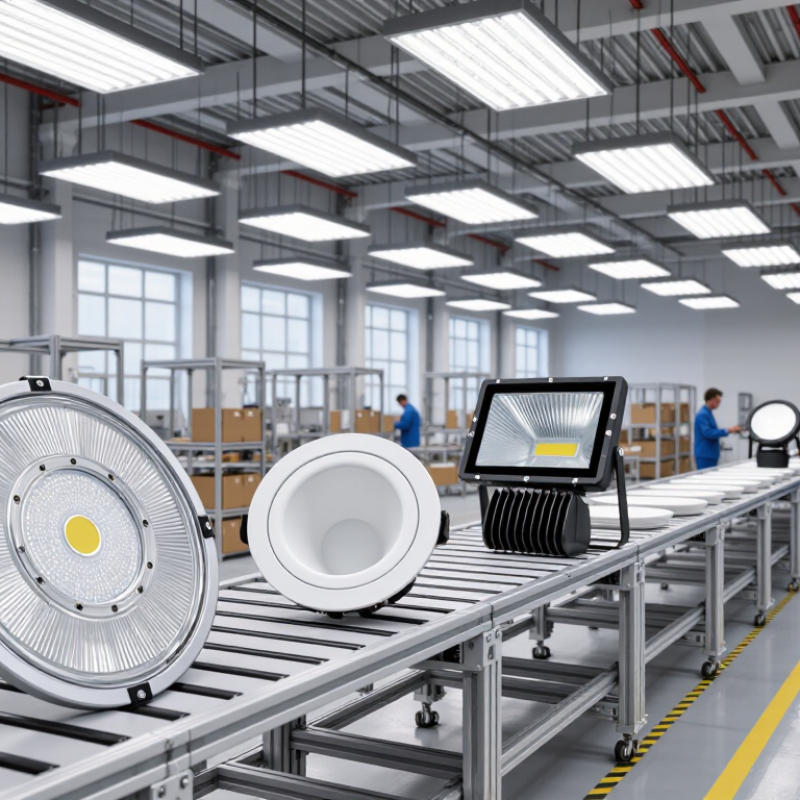
An LED lighting solutions supplier is more than a seller of lamps. It helps buyers turn a space’s needs—brightness, beam shape, color temperature, controls, and operating hours—into a workable lighting system. A warehouse may need high-bay fixtures with focused optics; a shop may need softer light and accurate color. Suppliers can also coordinate samples, photometric files, installation guidance, and quality checks. The practical test is whether recommendations match measured performance, not just a catalog image. Small details matter.
The International Energy Agency reports that lighting accounts for about 15% of global electricity use and around 5% of global greenhouse-gas emissions. The U.S. Department of Energy says LEDs use at least 75% less energy and can last up to 25 times longer than incandescent lighting. These figures make product selection important, but they do not guarantee a good result. A dependable supplier should explain test data, warranty terms, thermal management, and control compatibility in plain language. That definition can sound too neat. On real projects, a sample may reveal glare or uneven light, and specifications may need another round of revision.
| Supplier Type | Typical Products and Services | Common Strengths | Best Suited For | What to Verify |
|---|---|---|---|---|
| LED component supplier | LED packages, modules, circuit boards, drivers, and related components. | Component-level options and technical specifications for manufacturers developing their own fixtures. | Lighting manufacturers, product developers, and buyers assembling or customizing luminaires. | Electrical and photometric datasheets, operating conditions, product consistency, and traceability. |
| LED luminaire manufacturer | Finished fixtures such as indoor, outdoor, industrial, or commercial lighting products. | Ready-to-install products, with options that may include different optics, housings, or control interfaces. | Distributors, contractors, and project buyers seeking finished lighting equipment. | Applicable safety and performance test reports, warranty terms, product availability, and sample quality. |
| Custom or OEM/ODM supplier | Custom product design, specification changes, private-label manufacturing, or production to a buyer’s design. | Can support project-specific configurations, subject to the supplier’s engineering and production capabilities. | Buyers needing tailored form factors, features, packaging, or production arrangements. | Design ownership, tooling costs, sample approval process, minimum order quantities, and change-control procedures. |
| Lighting controls and smart-system supplier | Control devices and related lighting-system components, such as dimming or networked-control solutions. | Can help coordinate luminaires, control equipment, and system requirements. | Commercial or infrastructure projects that need managed lighting or integration with building systems. | Protocol compatibility, interoperability tests, cybersecurity information where relevant, and system support. |
| Integrated lighting solutions provider | A combination of lighting equipment, design assistance, controls, and project or installation support. | May coordinate multiple parts of a project instead of supplying fixtures alone. | Projects that require lighting calculations, coordinated equipment selection, or ongoing technical support. | Scope of responsibility, design deliverables, local installation capability, commissioning, and after-sales coverage. |
| How to compare suppliers | Compare technical fit, product documentation, quality processes, delivery capability, and support. | Using the same requirements for each supplier makes quotations and samples easier to evaluate. | Any buyer shortlisting suppliers for a commercial, industrial, residential, or infrastructure project. | Check test reports against the exact model; confirm that any claimed standards or marks apply to the destination market and product. |
| What is an LED lighting solutions supplier? | A business that supplies LED lighting products and may also provide design, customization, controls, or project services. | The term describes a range of supplier capabilities; it does not by itself guarantee a particular product quality or service level. | Buyers who need anything from LED components to a coordinated lighting system. | Confirm whether the supplier is the manufacturer, a trading company, a service provider, or a combination, and assess the relevant capabilities directly. |
Related Posts
-
10 LED Lighting Buying Tips for Global Buyers
-
What Are the Top Low Power Lighting Manufacturers in China?
-

Unlocking Success with Innovative Approaches to Best Led Lighting Solutions
-
Maximizing Business Impact: A Guide to Choosing the Right LED Spotlights for Global Procurement
-
Creative Uses of Led Lighting in Various Industries
-
Innovative Applications of Best Led Fixture in Various Industries