Top 10 Types of LED Spotlights for Global Buyers

Choosing Led Spotlights is not simply a matter of brightness. Beam shape, installation method, colour quality, dimming compatibility, and heat management all affect performance. The International Energy Agency has reported that lighting accounts for roughly 15% of global electricity use, making efficiency a practical purchasing concern, not just a specification on a box. In its 2020 U.S. Lighting Market Characterization, the U.S. Department of Energy found that LEDs made up about 47% of installed lighting stock in the United States. That figure describes one national market, not every buyer’s conditions.

This guide compares ten common spotlight types, from recessed and track-mounted fixtures to GU10 lamps, outdoor models, and smart options. Each suits a different setting: a narrow beam may highlight a shop display, while an adjustable gimbal can direct light onto a kitchen counter. Small details matter. Buyers should check lumens, beam angle, colour-rendering index, input voltage, dimmer support, and ingress protection for exposed locations. These specifications can vary between regions and product ranges, so a familiar fitting name does not guarantee compatibility. There is no perfect shortlist. Some buyers will prioritise easy replacement; others need precise accent lighting or weather resistance. The comparisons ahead offer a practical starting point, while product datasheets remain essential before purchase.
Top 10 Types of LED Spotlights for Global Buyers

LED Spotlight Basics and Classification Principles

Top 10 Types of LED Spotlights for Global Buyers

LED Spotlight Basics and Classification Principles

An LED spotlight concentrates light into a directed beam, rather than spreading it evenly like a general room lamp. Its performance depends on more than wattage. Compare lumen output, beam angle, color temperature, and color rendering index. A 15-degree beam can highlight a small display, while a wider beam may suit a work surface. Small differences matter.

Spotlights can be classified by optical beam, mounting method, intended use, and control options. Track-mounted models offer flexible positioning; recessed models sit neatly in ceilings; outdoor models need suitable protection against moisture and dust. Buyers should also check glare, dimming compatibility, and operating conditions. A wattage figure alone says little. These categories help compare the ten common spotlight types, though real products may overlap. That’s worth remembering.

Tips: Ask for beam-angle and lumen data, not just product photos. Check the stated color temperature against the space: warm light can feel comfortable, while cooler light reveals detail. Confirm local electrical and installation requirements with a qualified professional. A tidy classification is useful, but the actual room can still surprise you.

The Ten Main LED Spotlight Types and Their Designs

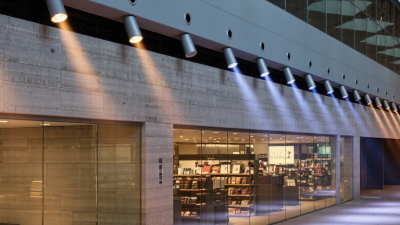
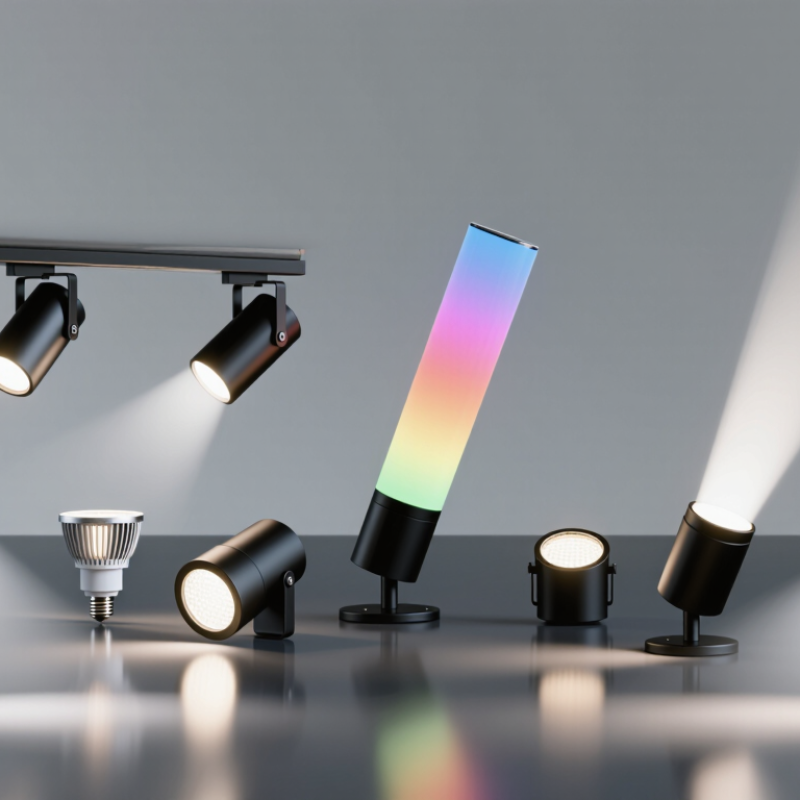
LED spotlights differ by mounting style, beam control, and heat management. Recessed fixed models sit flush with ceilings and suit corridors or compact rooms. Recessed gimbal spotlights tilt toward artwork or shelves, though their adjustment range varies by design. Track-mounted heads slide along a rail, making layouts easier to change. They work well in galleries and retail displays. Surface-mounted cylinders offer a visible, directable option where ceiling cavities are shallow.

Some types are defined by their light distribution. Narrow-beam spotlights create crisp accents on a sculpture or textured wall, while wider beams cover larger surfaces. COB designs place multiple LED chips together, often producing a concentrated source; lens quality still affects glare and beam shape. Mini spotlights fit joinery and display cases, but small housings can limit output and cooling. Outdoor spotlights need suitable weather protection for their location, plus careful aiming to avoid unwanted spill. Wall-washing designs spread light more evenly across vertical surfaces, rather than forming one bright circle. That difference is easy to miss. Specifications help, but a beam-angle diagram and a sample test can reveal how the fixture behaves in an actual room. Even experienced buyers sometimes overestimate brightness from wattage alone.

Top 10 Types of LED Spotlights for Global Buyers - The Ten Main LED Spotlight Types and Their Designs

LED Spotlight Type Typical Design Common Beam Angle Typical Power Range Common Applications Key Selection Consideration
Fixed Recessed Spotlight Compact fixture set into a ceiling, with the light source aimed straight down. 24°–60° 3–15 W Hallways, kitchens, offices, and general accent lighting. Check ceiling cut-out size, installation depth, and whether the light source can be replaced.
Adjustable Recessed Spotlight Recessed fitting with a tilting or swivelling inner lamp holder for directional lighting. 15°–60° 5–20 W Artwork, feature walls, retail displays, and sloped-ceiling lighting. Confirm the adjustment range and whether tilting causes glare or visible light leakage.
Gimbal Spotlight Recessed fixture with a pivoting inner ring that lets the beam be aimed after installation. 15°–40° 5–20 W Galleries, showrooms, living areas, and focused accent lighting. Review tilt and rotation limits, trim dimensions, and compatibility with the ceiling construction.
Track Spotlight Adjustable head mounted on an electrified track; heads can be repositioned along the track. 15°–60° 7–40 W per head Retail stores, galleries, studios, and flexible display areas. Verify track-system compatibility, electrical configuration, and the number of fixtures the circuit can support.
Surface-Mounted Spotlight Compact spotlight fixed directly to the ceiling or wall without a recessed cut-out. 15°–60° 5–30 W Concrete ceilings, renovations, corridors, and spaces with limited ceiling voids. Check fixture height, mounting method, and access to the driver for maintenance.
Pendant Spotlight Directional spotlight suspended from the ceiling by a stem, cable, or pendant housing. 15°–45° 5–25 W Kitchen islands, counters, reception desks, and high-ceiling accent lighting. Consider suspension length, ceiling height, and whether the head can be aimed.
Pin-hole Spotlight Small-aperture recessed design that conceals most of the fixture and creates a discreet beam. 15°–40° 2–10 W Minimalist interiors, hospitality spaces, display niches, and subtle accent lighting. Confirm aperture size, required installation depth, and glare control.
Cabinet and Display Spotlight Miniature surface-mounted, recessed, or clip-on fixture designed for shelves and display cases. 15°–60° 1–8 W Kitchen cabinets, retail shelving, showcases, and collectibles displays. Check fixture dimensions, heat management, wiring method, and the power supply requirements.
Outdoor Spike Spotlight Weather-resistant adjustable head on a ground spike, often with a separate low-voltage connection. 15°–60° 3–20 W Garden trees, façades, pathways, and landscape features. Look for an appropriate ingress-protection rating, outdoor-rated cabling, and suitable corrosion resistance.
Zoomable Spotlight Adjustable-optic fixture that changes its beam from a narrow spot to a wider flood. Typically adjustable from about 10° to 60° 10–50 W Exhibitions, galleries, retail displays, and installations needing flexible beam control. Check the usable zoom range, beam uniformity, and whether adjustment is manual or motorized.

Note: Power and beam-angle figures are indicative market ranges, not fixed standards. Actual specifications vary by optic, fixture size, installation method, and manufacturer. Confirm local electrical, safety, and environmental requirements before purchasing.

How Beam Angles, Mounting Styles, and Light Output Differ

LED spotlights are not interchangeable; beam angle, mounting style, and light output shape how each performs. A narrow beam, often around 10 to 25 degrees, creates a defined pool of light for artwork or a display shelf. Wider beams spread light across a kitchen counter or shop floor. The labels vary between manufacturers, so check the stated angle and test a sample where possible. Small details matter.

Recessed fixtures sit neatly in ceilings, while track heads can be repositioned as displays change. Surface-mounted models suit solid ceilings, and gimbal versions tilt toward a target. Outdoor spike lights aim into planting beds, but their weather rating and installation instructions need careful review. Output is measured in lumens, not watts; compare lumens and beam shape together. A bright, narrow spotlight may still leave nearby areas dim. That rule is useful, but not perfect. Ceiling height, wall color, and fixture spacing can alter the result. For a comfortable room, avoid aiming intense beams directly at eye level, and check whether dimming is supported before choosing.

Top 10 Types of LED Spotlights for Global Buyers

How beam angles, mounting styles, and light output differ

The chart compares representative beam angles: narrower beams concentrate light for accenting, while wider beams cover more area. Actual specifications vary by model, optics, wattage, and manufacturer; the lumen ranges below are indicative product ranges, not fixed standards.

Spotlight type Typical mounting style Indicative light output Representative beam angle
Narrow-beam LED spotlightTrack, recessed, or surface-mounted fixture200–1,000 lm15°
GU10 LED spotlightTwist-lock lamp in recessed or surface fixture250–700 lm36°
MR16 LED spotlightLow-voltage recessed or track fixture200–700 lm36°
PAR20 LED spotlightRecessed, track, or surface fixture400–800 lm25°
PAR30 LED spotlightRecessed, track, or surface fixture600–1,200 lm30°
PAR38 LED spotlightSurface, track, or outdoor-rated fixture900–1,800 lm40°
Adjustable recessed LED spotlightCeiling-recessed, tilt-adjustable housing500–1,500 lm36°
Track-mounted spotlightAdjustable head on an electrified track500–2,000 lm24°
Gimbal recessed spotlightRecessed ceiling fixture with a swiveling lamp500–1,500 lm36°
Outdoor spike spotlightGround stake for landscape lighting300–1,200 lm30°

Common Applications for Each Type of LED Spotlight

Track spotlights suit retail shelves, galleries, and flexible displays. Recessed spotlights provide discreet pools of light in kitchens and hotel corridors. Gimbal models tilt toward artwork or worktops. Useful, but glare still needs checking.

PAR spotlights serve shop windows and building façades, while MR16 lamps fit compact display fixtures. GU10 spotlights are common in homes and small commercial interiors. COB spotlights create concentrated beams for counters and exhibits. Pinspots isolate a vase, dessert, or stage detail. RGBW models add adjustable color for event spaces; white-light quality can vary, so test samples before specifying.

Outdoor spotlights highlight trees, signs, and entrances when their weather rating matches the site. For every type, match beam angle, mounting height, and target distance; a narrow beam can create harsh hotspots on glossy surfaces. The International Energy Agency estimates lighting uses about 15% of global electricity. The U.S. Department of Energy says LEDs use at least 75% less energy than incandescent lamps. Those figures cover lighting broadly, not each spotlight type. Check dimmer compatibility and measured output. Small details matter.

Global Buyer Considerations: Efficiency, Safety, and Compatibility

For global buyers, efficiency should be checked at the fitting, not inferred from wattage alone. The U.S. Department of Energy’s Energy Saver guidance says LEDs use up to 90% less energy and last up to 25 times longer than incandescent bulbs. Treat these figures as a comparison, not a promise for every spotlight. Review lumens per watt, driver losses, and light output after warm-up. A narrow beam may appear bright in a catalogue but leave a workbench unevenly lit. Test beam angle and illuminance at the actual mounting height. A small sample installation can reveal awkward shadows.

Safety and compatibility need equal attention. Check thermal ratings, ingress protection, wiring instructions, and photobiological safety documentation referencing IEC 62471. Confirm the product’s voltage and frequency match the site supply, then verify dimmer, driver, socket, or track compatibility. Check the paperwork. For mixed projects, request test reports and clear installation limits from suppliers; labels alone may not answer every question. Dimming can be fiddly, especially when different drivers share one control circuit. Compare the complete setup before ordering in bulk, and confirm local conformity requirements for each destination market.

dLED: retail LED lighting
Privacy Overview

This website uses cookies so that we can provide you with the best user experience possible. Cookie information is stored in your browser and performs functions such as recognising you when you return to our website and helping our team to understand which sections of the website you find most interesting and useful.