
How to Use Thermistor in Electrical Circuits for Optimal Results?

Thermistors are vital components in various electrical circuits. Their sensitivity to temperature changes makes them ideal for precise thermal monitoring and control. Understanding how to effectively integrate a thermistor into an electrical circuit can lead to optimal performance and efficiency.

Incorporating a thermistor into an electrical circuit requires knowledge and expertise. It’s important to select the right type, either NTC or PTC, based on your specific needs. An NTC thermistor decreases resistance with rising temperatures, while a PTC thermistor increases resistance. Both types play critical roles in designing circuits for specific applications.

Proper placement within the circuit is another key consideration. A poorly positioned thermistor can result in inaccurate readings. Moreover, resistors may need adjustment for correct calibration. This can affect the overall functionality and reliability of the Thermistor Electrical Circuit. Experimentation and optimization are essential for achieving the desired results. Embrace the learning process, as troubleshooting becomes part of mastering thermistors in circuits.
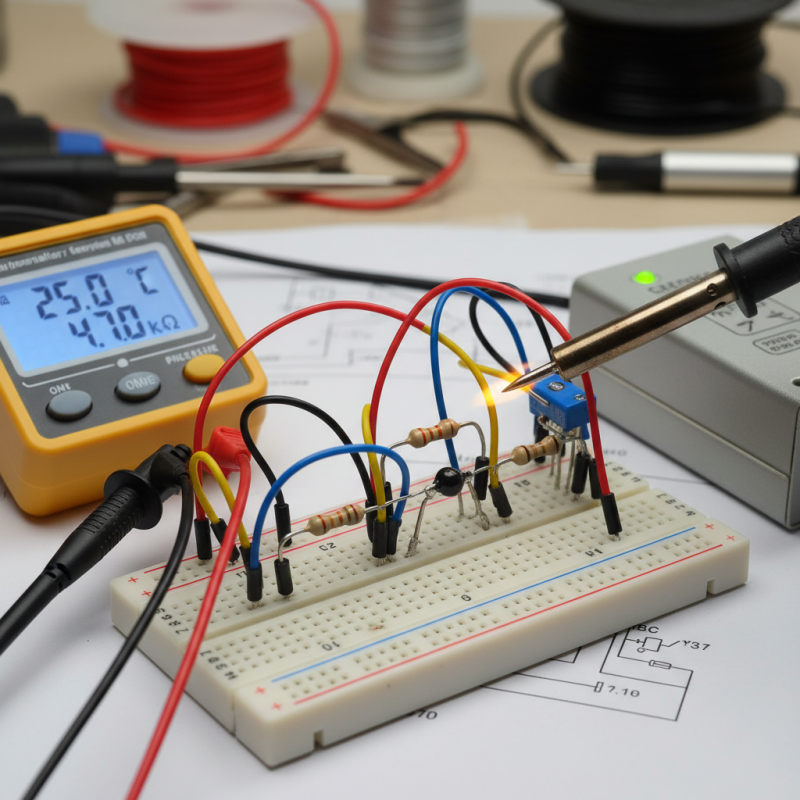
How to Use Thermistor in Electrical Circuits for Optimal Results?

Understanding the Basics of Thermistors and Their Types

Thermistors are crucial components in electrical circuits. They are temperature-sensitive resistors, commonly used for temperature measurement and control. Understanding thermistors involves knowing their two main types: NTC and PTC. NTC means negative temperature coefficient, where resistance decreases as temperature increases. This property makes NTC thermistors ideal for temperature sensors and compensation applications.

On the other hand, PTC thermistors have a positive temperature coefficient. Their resistance increases with temperature rise, making them suitable for overcurrent protection. This distinction is important when selecting thermistors for specific tasks. Each type has unique specifications that influence circuit performance. For instance, NTCs typically offer high sensitivity, while PTCs provide reliable circuit protection.

Despite their benefits, using thermistors requires careful consideration. Improper application can lead to inaccurate readings or circuit malfunction. Issues like environmental factors and installation errors can affect performance. Understanding the thermistor's characteristics helps avoid these pitfalls. Regular testing and recalibration can ensure optimal results in your projects.

How to Use Thermistor in Electrical Circuits for Optimal Results?

Type of Thermistor Resistance at 25°C (Ω) Temperature Range (°C) Applications
NTC Thermistor 5,000 -55 to 125 Temperature sensing, automotive applications, HVAC systems
PTC Thermistor 10,000 -40 to 150 Overcurrent protection, temperature control
Glass Thermistor 20,000 -200 to 300 Scientific research, precision temperature measurement
Bead Thermistor 2,000 -50 to 200 Thermal regulation in electronics, medical equipment

Finding the Right Thermistor for Your Electrical Circuit Design

When designing an electrical circuit, selecting the right thermistor is crucial. Thermistors are temperature-sensitive resistors. They come in two types: NTC (Negative Temperature Coefficient) and PTC (Positive Temperature Coefficient). NTC thermistors decrease resistance as temperature increases, while PTC thermistors do the opposite. Choosing the wrong type can lead to less efficient temperature control.

A report by the Electronic Industries Alliance states that up to 40% of circuit failures are related to thermal issues. Using the appropriate thermistor helps mitigate this risk. For instance, if a circuit requires precise temperature readings, an NTC thermistor may be more reliable. Accuracy in circuit operations can improve system performance by as much as 30%, according to a study from the International Journal of Electronics.

Consider the thermal characteristics of the environment where the circuit will operate. Some thermistors are sensitive to rapid temperature changes. Others are designed for stable conditions. Always analyze your circuit’s specific requirements. Take time to evaluate the thermistor specifications, including its resistance tolerance and temperature range. These details can make a significant difference in the overall circuit effectiveness.

Integrating Thermistors into Circuit Schematics Effectively

Integrating thermistors into circuit schematics requires careful consideration of their characteristics. Thermistors are temperature-sensitive resistors, either NTC (negative temperature coefficient) or PTC (positive temperature coefficient). NTC thermistors decrease resistance as temperature rises, while PTC thermistors do the opposite. When designing circuits, understanding these behaviors is essential for achieving accurate temperature measurements.

According to a report by the International Data Corporation (IDC), the global thermistor market is projected to grow at a CAGR of 7.1% from 2023 to 2028. This growth emphasizes the need for effective integration in electronic designs. Precise placement in a circuit ensures optimal thermal response. Connecting them in parallel or series can affect sensitivity, response time, and overall circuit performance.

Moreover, avoid potential pitfalls like incorrect circuit paths. Misjudging the thermistor's temperature range can lead to inaccurate readings. Testing the circuit under various temperatures is crucial to validate performance. Employing basic circuit simulation software can also help visualize the effects of thermistors before actual implementation. Accurate integration can significantly improve device reliability and efficiency.

Optimizing Thermistor Performance with Calibration Techniques

Optimizing thermistor performance starts with accurate calibration. Calibration ensures that the thermistor provides precise temperature readings. It is essential, especially in sensitive applications like medical devices or environmental monitoring. A poorly calibrated thermistor can lead to significant errors.

For effective calibration, use known temperature points. This can involve a controlled temperature bath or reliable reference devices. Recording measurements at these points is crucial. Compare the thermistor output with reference readings. Adjust the calibration curve as needed, ensuring it reflects the true behavior across the intended temperature range.

Accuracy isn’t just a number. It's vital for applications relying on precise temperature control. Small deviations can cause system failures or incorrect data reporting. Regular calibration checks should be part of any maintenance routine. The process can be tedious, but it solidifies the thermistor's reliability and efficiency. Reflecting on past calibration processes can help identify improvement areas.

Thermistor Performance Optimization through Calibration Techniques

Troubleshooting Common Issues with Thermistor Applications in Circuits

When working with thermistors in electrical circuits, troubleshooting common issues can enhance performance. Thermistors are temperature-sensitive resistors that react to environmental changes. They play a crucial role in temperature control, but can exhibit specific challenges.

One common issue is inaccurate readings. This often arises when a thermistor is improperly calibrated. Ensure that it's installed correctly and is free from contamination. Check the connection points as loose connections can lead to fluctuating data. Monitor the circuit under different temperature conditions to verify the thermistor's output.

Another frequent problem is thermal lag. If the thermistor responds too slowly, it may not accurately capture quick temperature changes. This can delay circuit responses. To mitigate this, consider the placement of the thermistor. It should be positioned in a location where airflow is sufficient. Adjusting the size of the thermistor can also help reduce lag in readings. Being aware of these issues fosters better practices in thermistor applications, leading to improved circuit reliability.

dLED: retail LED lighting
Privacy Overview

This website uses cookies so that we can provide you with the best user experience possible. Cookie information is stored in your browser and performs functions such as recognising you when you return to our website and helping our team to understand which sections of the website you find most interesting and useful.