Top 10 Suppliers of Stainless Steel Clamps Worldwide
Choosing a reliable source for Stainless Steel Clamps can affect more than purchase price. Material grade, dimensional accuracy, surface finish, and consistent production all matter when clamps must perform in demanding environments. A poorly matched clamp may loosen, corrode, or damage the connected component. Small details count.
This guide introduces ten suppliers serving markets worldwide, including manufacturers and established industrial brands. It considers practical factors such as product range, available stainless steel grades, customization options, quality documentation, and access to technical support. These points can help buyers compare suppliers for applications in piping, automotive systems, food processing, and general equipment assembly. Requirements differ, though. A clamp suited to a low-vibration installation may not fit a high-pressure or outdoor application.
The list is intended as a starting point, not a universal ranking. Supplier capabilities, regional availability, and lead times can change, and public product information does not always reveal how a part performs in service. That is worth remembering. Before ordering, confirm specifications, request relevant certificates, and check samples or test data where appropriate. Buyers should also discuss operating conditions directly with suppliers. The right choice depends on the job, the installation, and the evidence available—not a name alone.
What Stainless Steel Clamps Are and Where They Are Used
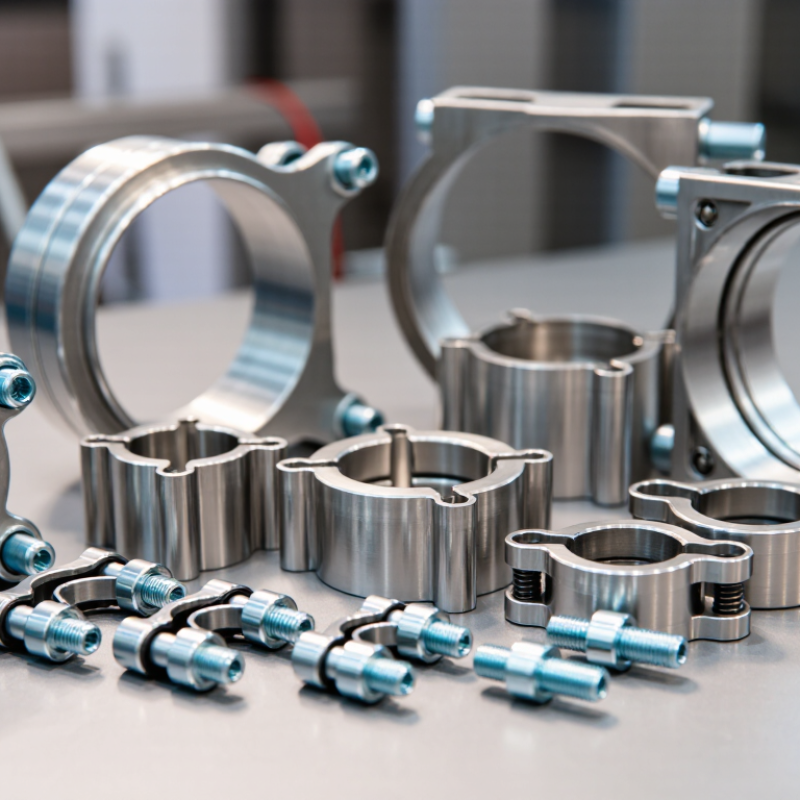
Stainless steel clamps hold hoses, pipes, cables, and protective covers in place by tightening around them. Common designs include screw-adjusted band clamps, bolt-secured clamps for larger hoses, and spring clamps for lines that need some flexibility. The best choice depends on the object’s diameter, surface, and operating conditions. Fit matters.
These clamps appear in plumbing, food-processing equipment, vehicle assemblies, HVAC systems, and outdoor installations. For example, a band clamp can secure a hose to a metal fitting, while a pipe clamp can limit movement along a wall. In workshops, clamps also help keep cable bundles orderly and reduce strain at connection points. Check the edges. A poorly sized or misaligned band may pinch a hose, loosen under vibration, or leave uneven pressure.
“Stainless steel” does not mean every clamp resists every environment equally. Different grades and finishes behave differently around salt, cleaning chemicals, heat, and moisture. Match the clamp material to the conditions, and check that its width and adjustment range suit the connection. During installation, tighten it evenly; excessive force can damage soft tubing or distort a thin-walled pipe. Periodic inspection is sensible where vibration or temperature changes are common, though inspection intervals depend on the application.
Ten Leading Stainless Steel Clamp Suppliers Worldwide
Choosing ten leading stainless steel clamp suppliers worldwide requires more than comparing catalog prices. Strong suppliers can explain their material grades, forming methods, and inspection routines in plain terms. For example, a clamp used near saltwater may call for a different corrosion assessment than one fitted to a dry indoor duct. Ask for material certificates and sample parts, then inspect the band edges, screw engagement, and finish. Small defects matter.
A capable supplier should offer consistent dimensions across repeat orders and clear guidance on working load and installation torque. Look for traceable quality records, practical packaging, and realistic lead times. Some suppliers specialize in standard worm-drive clamps; others handle custom diameters, heavy-duty assemblies, or unusual fastening requirements. Not every large catalog signals deep manufacturing expertise. Verify the details.
Regional reach can help with delivery, but communication and after-sales support deserve equal attention. Compare responses to a specific drawing or sample request. Are tolerances stated? Can the supplier explain how it checks corrosion resistance? No supplier is perfect. A polished specification sheet may still leave questions about batch variation, and buyers should make room for that uncertainty. Pilot orders and incoming inspection can reveal issues before a full production run.
Products and Industries Served by the Leading Suppliers
Stainless steel clamp suppliers typically offer worm-drive hose clamps, T-bolt clamps, pipe clamps, and specialty band clamps. Product ranges differ in diameter, band width, closure style, and steel grade. These details matter. A narrow clamp may suit a small coolant hose, while a wider, heavy-duty design can secure larger ducts or industrial lines. Leading suppliers commonly serve food processing, marine equipment, automotive manufacturing, HVAC, irrigation, and construction. Each industry places different demands on corrosion resistance, vibration control, and cleaning access.
For damp marine settings, buyers often compare alloy specifications and fastener materials, not just the clamp band. Food-processing equipment may need smooth edges and easy-to-clean surfaces. Automotive and HVAC applications can require consistent holding force through temperature changes and vibration. Supplier catalogs do not always explain those differences clearly. That is worth questioning. Ask for dimensional drawings, operating ranges, and material documentation before choosing a part. A polished finish alone does not prove a clamp suits a harsh environment.
Tips: Measure the hose or pipe outside diameter, including its cover. Check the clamp’s usable range and tightening method. Test fit when practical. Small mismatches can cause leaks, crushed hoses, or repeated maintenance.
How to Choose a Stainless Steel Clamp Supplier
When choosing a stainless steel clamp supplier, look beyond a polished catalogue. Ask for the exact alloy grade, dimensional tolerances, load limits, and material test documents for each production lot. A claim such as “316 stainless” is not enough without traceable paperwork. Small details matter. Check how the supplier controls welding, edge finishing, and passivation, if these processes apply to your clamp design.
Production scale makes verification important. World Stainless reported 58.4 million metric tonnes of global stainless steel melt-shop production in 2023, up 4.6% from 2022. That figure describes the wider material market, not clamp quality. Still, it is a useful reminder to confirm where the steel comes from and whether the supplier can trace each batch. For demanding applications, state relevant ASTM or ISO requirements in the purchase specification, then request test records against those requirements.
Ask for samples made with the same process and finish as the quoted order. Inspect the band edges, screw engagement, fit, and corrosion performance under conditions close to actual use. Ask for production capacity, lead times, packaging details, and a clear process for handling defects. Ask for proof. One uncomfortable point: a perfect sample can hide inconsistent batch control. Request recent inspection records, and clarify who pays for failed parts before placing a large order.
