
Who Are the Top CNC Machining Center Suppliers in China?

Choosing a CNC machining partner in China involves more than comparing machine lists or quoted prices. Cnc Machining Centers can produce precise components, but results also depend on tooling, programming, inspection, and operator experience. A polished website cannot prove those capabilities.

This guide looks at suppliers through practical questions: What materials do they machine? Can they hold the tolerances your drawing requires? How do they document inspections and manage delivery dates? Ask for relevant case studies, sample inspection reports, and clear explanations of equipment and processes. Details matter. A cleanly machined aluminum housing, for example, should match its drawing and arrive with traceable measurement records—not just a reassuring sales promise.

Supplier claims deserve verification. Certifications, when relevant, should be current and checked with the issuing organization. A sample order can reveal communication habits, packaging quality, and how a shop handles a question or mistake. That evidence is useful, though it cannot guarantee every future production run. Some details remain difficult to compare from a website alone.

Rather than treating “top” as a universal ranking, this overview highlights factors buyers can use to assess Chinese suppliers for their own projects. It considers capability, quality controls, responsiveness, and fit for different production needs. The best choice may not be the largest factory. It may be the one that explains its limits clearly—and follows through.
Who Are the Top CNC Machining Center Suppliers in China?

What Is a CNC Machining Center and How Is It Used?

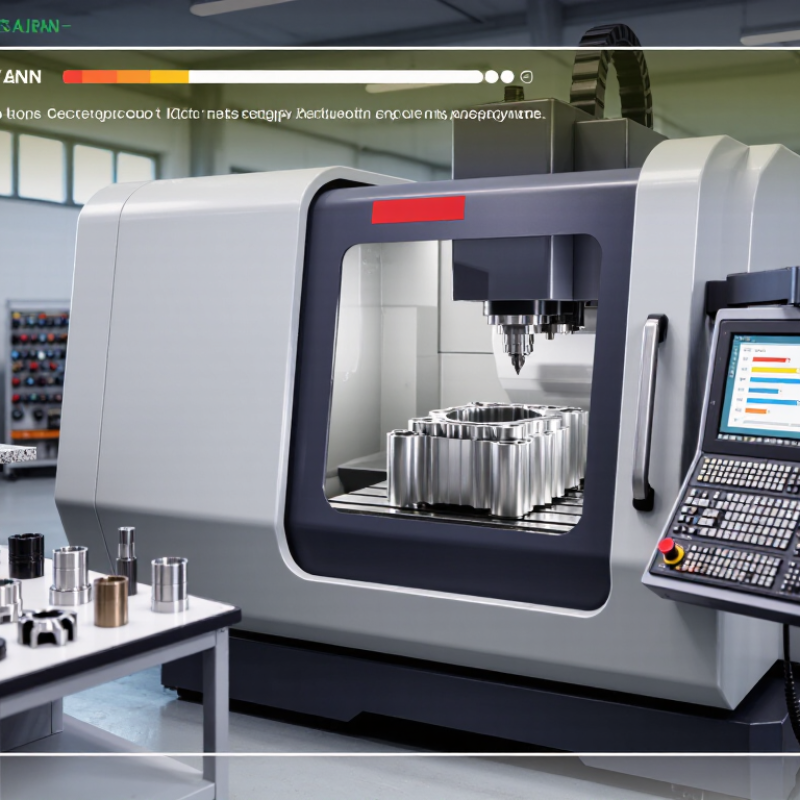
A CNC machining center is a machine tool that removes material under computer control. It commonly combines milling, drilling, boring, and tapping in one setup. A spindle rotates the cutting tool, while programmed axes move the tool or workpiece. Many centers also include an automatic tool changer, which reduces manual tool swaps.

In a machine shop, an operator secures a metal block in a vise, loads a program, and checks the tool offsets before cutting. The machine can then produce faces, slots, and holes with consistent positioning. This is useful for parts that need several features aligned, such as pump housings or fixture plates. Setup still matters. A poorly clamped part can shift, even when the program is correct.

Machining centers are used for prototypes, replacement parts, and repeat production in sectors such as equipment manufacturing and aerospace. Vertical models offer convenient access from above; horizontal models can reach multiple sides with suitable fixtures. The right choice depends on part size, material, tolerance, and batch volume. More axes do not automatically mean better results. A simpler machine may be more practical, though that judgment can be wrong without reviewing the actual part and production plan.

How Is China’s CNC Machining Center Industry Structured?

China’s CNC machining center industry is better understood as a production network than as a single group of machine builders. Upstream suppliers make spindles, linear guides, ball screws, castings, motors, and control components. Some specialize in one part; others assemble complete systems. Component quality can vary, so buyers often assess the whole machine, not just its headline specifications.

Machine-tool manufacturers sit at the center of this structure. They integrate mechanical assemblies, electrical systems, software, and safety features, then test machines for accuracy and repeatability. Their customers range from small job shops to automotive, aerospace, and general engineering plants. Dealers and service teams connect these manufacturers with users. Response time matters. A machine that waits days for a replacement part can disrupt a busy workshop, even when its machining performance is excellent.

Production and supplier activity is concentrated in several manufacturing regions, though capabilities differ from one city to another. Some areas have deeper component networks; others focus more on assembly, trade, or export support. This structure can offer buyers broad choices and competitive lead times, but it also makes supplier evaluation less straightforward. Catalogs rarely show everything. Factory visits, sample machining, spare-parts checks, and clear service commitments reveal more. The picture is uneven, and that deserves a closer look.

Which Criteria Help Identify Leading Chinese Suppliers?

A credible CNC machining center supplier should provide measured evidence, not only catalogue specifications. Ask for positioning accuracy and repeatability results tested under ISO 230-2, plus the machine’s configuration and test conditions. Then request a cutting trial using your material, tool, and tolerances. Inspect the part on a calibrated measuring system. A polished sample proves little if it was made under different conditions.

Production capability matters, but scale alone is not quality. The International Federation of Robotics reported that China installed 276,288 industrial robots in 2023, representing 51% of global installations in its World Robotics 2024 report. This indicates a substantial automation ecosystem, not that every supplier delivers consistent machine accuracy. Check spindle runout, thermal stability, axis backlash, and repeatability after warm-up. Ask for maintenance records and realistic spare-parts lead times. Details count.

Audit the factory if possible. Watch operators inspect castings, assemble axes, and record test results. Request customer references for comparable materials and production volumes, then verify them directly. Review quality procedures and after-sales response times, including who handles commissioning and training. A certificate helps, but it cannot replace process evidence. Some checks may feel excessive. They are cheaper than discovering a vibration problem during a long production run.

Who Are the Top CNC Machining Center Suppliers in China? — Which Criteria Help Identify Leading Chinese Suppliers?
Evaluation Criterion What to Assess Evidence to Request or Verify Why It Matters
Machine capability and configuration Suitable machine types, axis configurations, work envelope, spindle options, tool capacity, and supported materials for the parts being purchased. Current equipment list, machine specifications, sample-part records, and confirmation that the proposed machines are available for the project. Capability should match the part geometry, material, batch size, and required operations; a general machine list alone does not establish suitability.
Dimensional accuracy and process control Ability to meet the tolerances, surface-finish requirements, and inspection plan defined on the buyer’s drawings and specifications. Inspection reports for comparable parts, measurement-equipment records, process-control documents, and sample-part results against agreed acceptance criteria. There is no single tolerance that applies to every CNC job. Performance must be demonstrated for the specific material, geometry, process, and measurement method.
Quality-management system Documented procedures for production control, traceability, nonconformance handling, corrective action, and supplier oversight. Valid certificates where applicable, certificate scope and site details, audit summaries, and examples of inspection and corrective-action records. ISO 9001 is a general quality-management standard. Industry-specific certifications may be relevant to particular sectors; verify that the certified scope covers the work and location in question.
Inspection and measurement capability Availability of appropriate inspection methods for the part’s dimensions and features, including calibrated instruments and suitable measurement processes. Inspection-equipment list, calibration records, sample dimensional reports, and details of any required first-article or in-process inspection. Reliable measurement helps confirm that parts conform to the drawing and that inspection results are repeatable and traceable.
Production capacity and delivery reliability Available capacity for the required order volume, production scheduling, lead-time assumptions, and contingency planning. Capacity plan for the project, a written production schedule, recent on-time delivery records, and an explanation of how delays or demand changes are managed. Capacity and delivery performance are project-specific. Confirm the promised schedule against the actual scope, quantity, and production route.
Material and process traceability Controls for material identification, incoming inspection, production records, and any required special processes or subcontracted operations. Material certificates where required, lot or batch traceability examples, process records, and identification of outsourced operations. Traceability supports investigation and verification when material, process, or product requirements need to be confirmed.
Engineering and communication Ability to review drawings, clarify tolerances and specifications, identify manufacturability concerns, and manage engineering changes. Documented drawing-review process, example design-for-manufacturing feedback, change-control procedure, and named project communication contacts. Early clarification can reduce misunderstandings, avoid preventable rework, and keep production aligned with the approved revision.
Surface finishing and secondary operations Whether required finishing, heat treatment, coating, deburring, assembly, or other secondary operations are performed in-house or through qualified partners. Process specifications, sample finish reports or certificates where applicable, subcontractor controls, and clear responsibility for final inspection. Secondary operations can affect dimensions, material properties, appearance, and delivery time, so their controls should be included in the supplier assessment.
Export and commercial readiness Experience handling the buyer’s destination requirements, packaging instructions, shipping documents, and agreed commercial terms. Sample export documentation with sensitive details removed, packaging plan, written quotation assumptions, and confirmation of applicable delivery terms. Clear responsibilities for packaging, transport, documentation, and delivery terms help reduce avoidable cross-border shipment issues.
Total cost and quotation transparency Whether the quotation clearly states material, machining, finishing, inspection, tooling, packaging, and shipping assumptions. Itemized quotation, stated exclusions, pricing validity, minimum order conditions, and written confirmation of how engineering changes affect cost. A comparable quotation should reflect the same part revision, quality requirements, quantity, finishing, and delivery scope.
Supplier verification and risk management Whether the contracting entity, production location, relevant capabilities, and continuity plans have been checked. Business and site documentation, a site or remote process audit, customer references where available, and a documented risk or business-continuity plan. Verification helps distinguish demonstrated capability from unverified claims and clarifies who is responsible for production and quality.
How to identify leading suppliers There is no universal ranking that fits every CNC machining project. Compare suppliers against the same drawings, specifications, quantities, inspection requirements, and delivery conditions. Shortlist those that can provide verifiable, project-relevant evidence across the criteria above.

Who Are the Major CNC Machining Center Suppliers in China?

China’s major CNC machining center suppliers include large machine-tool manufacturers, specialized regional producers, and factories focused on export markets. Their ranges often cover vertical and horizontal machining centers, gantry machines, and compact models for small workshops. Some suppliers also offer installation, operator training, and spare-parts support. Details vary by model.

A capable supplier should provide clear specifications for spindle speed, axis travel, positioning accuracy, and tool capacity. Ask for a sample test report and inspect a machine cutting a familiar workpiece, such as an aluminum plate with drilled holes and milled edges. Check the chip conveyor, enclosure, and control interface, too. Small details matter.

Compare service response times and parts availability, not just the purchase price. Request references from users with similar materials and production volumes. Factory visits can reveal assembly practices, inspection routines, and how finished machines are packed. Remote reviews help, but they cannot show every detail. Even a strong supplier may not fit every shop. The best choice depends on workload, floor space, operator experience, and the support available after delivery. A rushed comparison can miss those constraints.

How Do Chinese Suppliers Differ in Technology and Applications?

Chinese CNC machining center suppliers differ less by country than by engineering focus. Some specialize in high-speed aluminum work, using direct-drive spindles, compact tool changers, and probing systems to reduce cycle time. Others target steel molds or heavy parts, where rigidity, thermal control, and reliable chip removal matter more than headline spindle speed. The details show up on the shop floor: a warm spindle can shift a bore, while poor chip evacuation can mark a deep pocket.

Automation is another dividing line. The International Federation of Robotics’ World Robotics 2024 report says China installed 276,288 industrial robots in 2023, about 51% of global installations. That figure describes robots, not CNC machines, but it signals strong demand for connected production cells. Suppliers serving this market may offer robot interfaces, pallet systems, and machine monitoring alongside the machining center. Yet “automation-ready” can mean very different things. Ask for interface specifications and an actual integration reference.

For buyers, compare application evidence, not brochures alone. Request cutting tests using your material, tool, and tolerance range; inspect surface finish and repeatability after the machine reaches operating temperature. A five-axis model may suit complex aerospace-style parts, while a simpler three-axis machine can be the steadier choice for repeat production. I would not judge either by rapid-traverse speed alone. That is easy to miss. Supplier documentation can also leave gaps, so confirm service response times, spare-part availability, and acceptance-test criteria before ordering.

Who Are the Top CNC Machining Center Suppliers in China?

How Chinese suppliers differ in technology and applications

Indicative catalog specification ranges, not market averages or supplier rankings. General-purpose vertical machining centers are commonly suited to versatile milling; high-speed vertical centers to lighter, faster machining; five-axis centers to complex multi-sided parts; and horizontal centers to production machining with multiple setups. Actual specifications vary by model and configuration.

dLED: retail LED lighting
Privacy Overview

This website uses cookies so that we can provide you with the best user experience possible. Cookie information is stored in your browser and performs functions such as recognising you when you return to our website and helping our team to understand which sections of the website you find most interesting and useful.