
As the electric vehicle market rapidly expands, choosing the right Dc Charging Connector becomes crucial. According to the International Energy Agency (IEA), global electric car sales reached 10 million in 2022, highlighting the importance of efficient charging solutions. Various connector types exist, but not all are created equal. Each has its own standards and specifications, influencing charging speed and compatibility.
The market for DC charging connectors is projected to grow significantly. A report by ResearchAndMarkets states that the DC fast charging market will exceed $30 billion by 2030. With many options available, it can be overwhelming to determine which DC charging connector suits your needs best. Understanding the differences in connectors, such as CCS, CHAdeMO, and Tesla’s proprietary solutions, is crucial for optimal performance.
In addition to charging speed, consider factors like installation requirements and future-proofing for upcoming technologies. Some connectors may not be compatible with all EV models. Reflecting on these details will help users make informed decisions. It is essential to analyze what matters most to you and your vehicle.
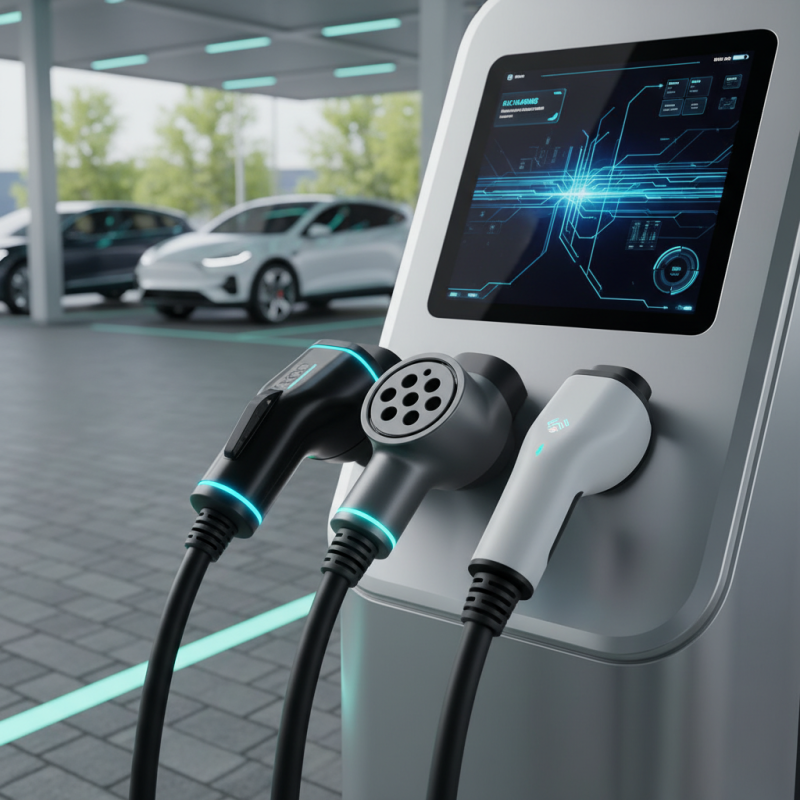
When considering DC charging connectors, understanding your options is essential. Several types of DC charging connectors are commonly used, each with distinct features. For instance, Type 1 connectors are prevalent in North America, while Type 2 is favored in Europe. Their design affects compatibility with various electric vehicles (EVs).
Another type worth noting is the CHAdeMO connector. This Japanese-standard connector is known for its fast charging capabilities. It's still widely used but could be less compatible with some newer EV models. Then there's CCS, or Combined Charging System, which merges AC and DC charging capabilities. This flexibility makes CCS increasingly popular.
Choosing the right connector requires an awareness of your vehicle and local infrastructure. The availability of charging stations varies by region. Sometimes, even nearby stations support only one type of connector. You may find instances where outdated connectors limit charging. Keeping these details in mind helps ensure an efficient and reliable charging experience.
Choosing the right DC charging connector can seem daunting. Focus on key features to find the best fit for you. Compatibility is crucial. Ensure your vehicle and charger are compatible. Research the different types of connectors available.
Consider charging speed. Not all connectors support fast charging. Review specifications carefully. A connector that delivers more power can reduce your wait time. However, don't overlook the benefits of slower charging. It can be more efficient for daily use.
Tips: Always check the installation requirements. Some connectors need professional help. Read user reviews to gauge reliability. Don't forget to consider the connector's build quality. Durability matters for long-term use. A well-constructed connector reduces the risk of malfunction.
Choosing the right DC charging connector is essential for maximizing your electric vehicle (EV) experience. Each model has specific compatibility requirements, and understanding these can save time and frustration. It's crucial to consult your vehicle's manual for detailed specifications. This ensures the connector you choose aligns with your EV's charging system.
**Tips:** Always double-check the plug type. Not all connectors fit every model. Look for user reviews online for real-life insights.
Another factor to consider is the charging speed. Some connectors support faster charging rates than others, impacting your EV's downtime. If you often go on long trips, prioritize a faster option. You might also reflect on local charging infrastructure. If certain connectors are rare in your area, your choices could be limited.
**Tips:** Think about your usual routes. Use maps and apps to discover available charging stations. Plan ahead to avoid surprises.
When evaluating DC charging connectors, charging speed and power requirements are crucial. Different vehicles and usage patterns demand various specifications. Fast charging stations typically provide higher power outputs, ranging from 50 kW to 350 kW. According to a 2022 industry report, 150 kW chargers can add around 200 miles of range in just 30 minutes. This statistic highlights the increasing demand for faster charging solutions.
Power requirements vary significantly across electric vehicle models. Many entry-level models may only support 7.2 kW, while high-performance vehicles can handle up to 800 volts. This disparity means users must carefully assess their vehicle's compatibility with the available charging infrastructure. A miscalculation could lead to frustration and inconvenience.
It's essential to consider future expansion as well. As battery technology evolves, so do charging standards and power needs. Current offerings may not suffice in a few years. Research suggests that the industry must adapt to meet the growing demand for faster, more efficient charging. Thus, choosing the right connector becomes a pivotal decision for both manufacturers and consumers.
As the adoption of electric vehicles continues to rise, advancements in DC charging connector technology are critical. Future trends focus on creating more versatile and efficient charging solutions. An emerging trend is the development of universal connectors. These seek to enhance compatibility across different EV models. Optimizing charging speed while ensuring safety remains a challenge.
Another area to explore is the integration of smart technology. Smart connectors will provide real-time data on charging status. They can help users optimize charging times based on electricity rates. Such features address user convenience and promote energy-saving practices. However, ensuring widespread adoption of smart technology poses hurdles. Not every EV owner may be ready to embrace these innovations.
Standards for DC charging connectors are also evolving. Regulatory bodies work tirelessly to establish global standards. These aim at simplifying the charging experience for all users. Yet, discrepancies in standards across regions can create confusion. Ongoing collaboration among stakeholders is essential. The path toward a seamless charging experience demands constant reflection and innovation.
