
An Energy Discharge Capacitor is selected for more than its capacitance rating. In pulsed systems, voltage, stored energy, discharge time, and repetition rate all affect performance. A part that looks suitable on a data sheet may behave differently in a compact enclosure or under repeated high-current pulses. Details matter.
For global buyers, comparing suppliers can be difficult. Product labels, test conditions, documentation, and shipping expectations may vary. Ask for the operating temperature range, equivalent series resistance, expected service life, and test data for the specific model. Check terminal dimensions too; a few millimeters can complicate installation or increase connection resistance. Confirm that ratings match the actual circuit, not only a sample application shown in a catalog.
This guide presents seven practical buying tips, from defining electrical requirements to checking manufacturing consistency and after-sales support. It also explains why price alone is a weak comparison: a lower-cost unit may require more frequent replacement or extra cooling. Still, verify. Request current technical documents and clarify any unclear specification directly with the manufacturer. A qualified engineer should review the final selection against system conditions and applicable requirements in the destination market. No checklist removes every risk, and I would not treat a supplier’s general claims as proof of performance. The right choice depends on measured needs, credible evidence, and careful questions before ordering.
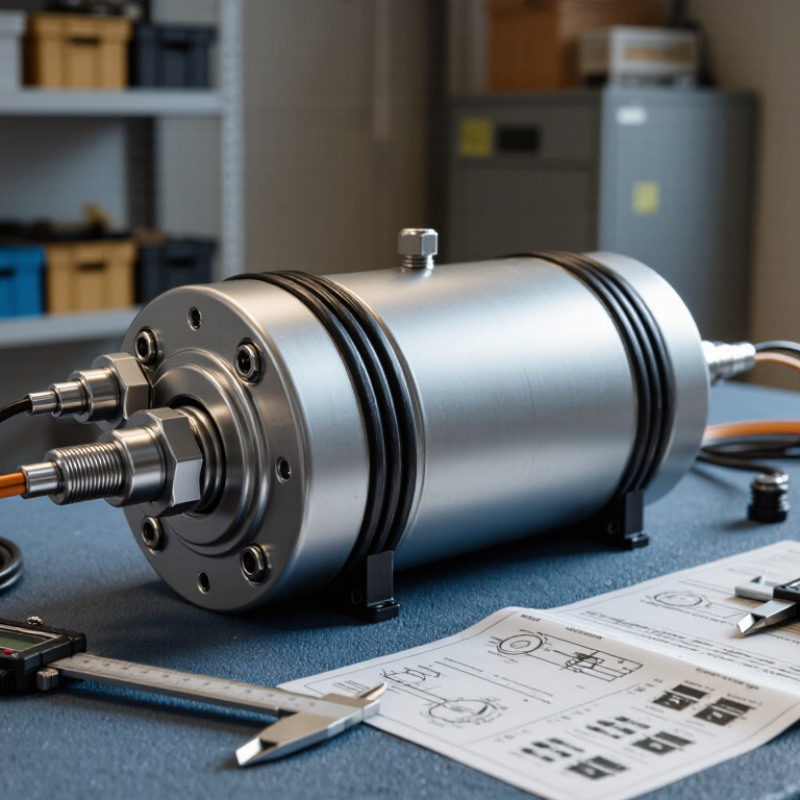
An energy discharge capacitor should match the job it will perform, not just the voltage printed on a specification sheet. Define the application first: Is it driving a pulsed load, releasing energy into a coil, or supporting a short test cycle? Record the required pulse width, repetition rate, load impedance, and acceptable voltage drop.
Small details matter. A 2-millisecond pulse repeated every second creates a different thermal duty than a single discharge.
Estimate the stored energy with E = ½CV² , then check the expected discharge current and waveform against the complete circuit. The peak current depends on more than capacitance; wiring resistance, switching components, and load behavior also shape it. Specify operating temperature, voltage tolerance, and the required service life. A neat calculation may still overlook stray inductance, so verify the design with a representative load where practical.
Tip: Share the real pulse profile with suppliers, including rise time and recovery interval. Avoid choosing solely by capacitance. Leave a sensible voltage and temperature margin, but confirm that the added margin does not create an unsuitable package or discharge profile. Be honest about uncertain inputs; estimates often need revision after the first test.
Capacitance sets the energy available for a discharge, but voltage changes it sharply: stored energy equals one-half capacitance multiplied by voltage squared. Doubling voltage can quadruple stored energy, provided the capacitor and circuit are rated for it. Compare the required capacitance at the actual operating voltage, not just the nominal value. Check tolerance, too. A unit marked 100 µF may not deliver exactly 100 µF under specified conditions. That matters.
Voltage rating alone does not predict pulse performance. Check peak current, pulse duration, repetition rate, equivalent series resistance, and allowable temperature rise. A short, high-current pulse can create local heating even when average power seems modest. Ask suppliers for discharge curves and test conditions; compare waveforms at matching voltage and load. IEC 61071:2017 covers capacitors for power electronics, including electrical and thermal performance tests. The U.S. Department of Energy’s 2022 Grid Energy Storage Technology Cost and Performance Assessment reports about 95% round-trip efficiency for supercapacitor systems. Treat that as a system-level reference, not a guaranteed component figure. I would still verify the application data; headline efficiency can hide pulse losses. Check the waveform.
How to read this chart: Stored energy is calculated as E = ½CV². These illustrative capacitance-and-voltage combinations show why both ratings matter: different combinations can store similar energy. Stored energy alone does not establish pulse capability; confirm peak current, pulse duration, ESR, ESL, repetition rate, and the manufacturer’s test conditions for the intended application.
Before requesting quotes, identify the capacitor’s destination, installation setting, and intended use. Safety marks are not interchangeable. A certificate accepted in one market may not meet another region’s requirements. Ask suppliers to name the exact standard and edition applied, and provide relevant test reports. Check evidence for voltage rating, insulation, temperature rise, and discharge behavior. Paperwork can be frustrating.
Confirm whether the capacitor is assessed as a component or within a complete assembly; that difference can affect required documentation. For energy discharge applications, request residual-voltage limits and discharge-time data, then compare them with your equipment’s service procedure. Keep clear nameplate photos, lot numbers, and translated instructions in the purchasing file. A common mistake is treating a familiar certification mark as proof of suitability everywhere. It is not. Requirements can change, and a document may cover a different model or configuration. Have a qualified local compliance specialist review uncertainties before shipment, especially when the capacitor will be integrated into custom equipment. Small details matter.
A discharge capacitor may look simple on a drawing, but its performance depends on how it handles repeated pulses. Ask suppliers for process controls covering electrode alignment, sealing, and insulation checks. Request lot traceability, not just a general quality statement. Small changes in materials or assembly can affect capacitance, equivalent series resistance, and service life.
Test evidence should match your actual operating conditions. Review measurements for capacitance, leakage current, dielectric strength, and pulse endurance. Check the test voltage, temperature, sample size, and acceptance limits. A result without these details is hard to compare. Ask whether testing is performed on every unit, each production lot, or selected samples. These are not interchangeable.
Documentation matters later, too. Request a current datasheet, inspection records, storage guidance, and a clear change-notification process. Confirm that the part number and revision match the quotation and samples. Keep records with your incoming inspection results. No file is perfect. Some documents may be missing a test condition or use an unclear revision date; ask for clarification before approval. A polished certificate alone cannot prove suitability. Compare the supplier’s evidence with your design requirements, and consider independent testing when the application has demanding pulse or safety needs.
| # | Buying tip | What to evaluate | Evidence to request | Practical verification |
|---|---|---|---|---|
| 1 | Match the capacitor to the discharge duty | Confirm capacitance, rated voltage, pulse or discharge current, energy per discharge, repetition rate, waveform, polarity, and expected service life. These requirements depend on the application and circuit design. | A written datasheet and application-specific rating statement, including defined operating and environmental conditions. | Compare the proposed ratings with the system’s maximum operating voltage, pulse profile, duty cycle, and thermal limits. Do not select by capacitance and voltage alone. |
| 2 | Check the supplier’s quality controls | Review manufacturing process controls, incoming material checks, inspection responsibilities, nonconformance handling, and corrective-action procedures. | A current quality-system certificate where applicable, process overview, sample inspection records, and documented corrective-action workflow. | Verify certificate scope and validity with the issuing certification body. For critical orders, consider a process audit or a documented supplier assessment. |
| 3 | Define tests and acceptance criteria before ordering | Identify which routine, sample, and type tests apply. Relevant checks may include capacitance, dielectric loss, insulation or leakage behavior, terminal integrity, and voltage withstand, as appropriate to the design and governing specification. | A test plan stating methods, sample size, test conditions, pass/fail limits, and the standard or customer specification used. | Ensure the limits and methods are agreed in the purchase specification. Test levels and acceptance limits should not be assumed to be universal across capacitor types. |
| 4 | Assess pulse capability and thermal performance | Check the stated peak current, pulse duration, repetition rate, equivalent series resistance or loss data where specified, cooling conditions, and permissible temperature rise. | Pulse-test results or design data relevant to the proposed operating waveform, plus temperature limits and mounting or cooling instructions. | Compare test conditions with the actual circuit duty. A result at a different pulse width, repetition rate, or ambient temperature may not demonstrate suitability for the intended use. |
| 5 | Review discharge and handling safety | Determine whether a discharge resistor or other discharge device is included or required, how residual voltage is controlled, and what safe storage, transport, and service procedures apply. | Discharge-device specifications if supplied, connection instructions, residual-voltage or discharge-time data under stated conditions, and safety warnings. | Confirm that the system design provides a verified discharge path and safe isolation procedure. A capacitor can retain hazardous energy after power is removed. |
| 6 | Require traceability and complete documentation | Check that production lots can be identified and linked to inspection results, material or process records where maintained, and product revisions. | Lot or serial identification, certificate of conformity, applicable test report, controlled datasheet revision, and packing list. | Request a sample document package before placing the order. Confirm that identifiers on the product, labels, and reports match. |
| 7 | Plan for global compliance, shipping, and after-sales support | Confirm applicable destination-market requirements, export and import documentation, packaging for mechanical and moisture protection, delivery terms, warranty scope, and technical support arrangements. | Applicable declarations or certificates, shipping and handling instructions, warranty terms, lead-time commitment, and a defined contact for technical issues. | Verify requirements for the destination and end use with the responsible compliance team. Clarify packaging, inspection at receipt, and the process for reporting transit damage or defects. |
Note: Final ratings, test methods, acceptance limits, and regulatory requirements should be established for the specific capacitor technology, circuit duty, and destination market.
An energy discharge capacitor may be inexpensive at the factory gate, yet costly by the time it reaches your site. Compare the full landed cost: unit price, export packing, freight, insurance, customs charges, and local handling. Ask whether the quote includes protective terminal covers, moisture barriers, and a rigid crate. Small omissions matter. A dented case or loose terminal can delay installation and create extra inspection work.
Shipping plans should match the capacitor’s size, weight, and sensitivity to impact. Request dimensions and gross weight before booking transport, then confirm how units are secured against movement. For long routes, clarify storage limits and whether the shipment needs weather protection. Delivery estimates are not guarantees; port congestion and transfer delays can change the schedule. Build practical buffer time into commissioning plans, even when a supplier sounds confident.
After-sales support belongs in the buying decision, not in a footnote. Confirm who answers technical questions, expected response times, and how to document transit damage or early failure. Ask for installation guidance, test records, warranty terms, and replacement-part availability in writing. Keep photos of the packaging and arrival condition. That is useful evidence. A checklist will not prevent every problem, and paperwork can feel excessive. Still, unclear responsibilities usually cost more than a few careful questions before payment.
