
How to Choose the Best RFID Locker in 2026?

Choosing the best Rfid Locker in 2026 requires more than comparing prices and screen designs. It demands careful attention to security, daily usability, maintenance, and long-term value. A modern locker may use RFID cards, mobile credentials, PIN codes, or several access methods together. Each option affects how quickly users collect belongings and how easily staff manage access.

Real experience matters. In a busy workplace, a locker door may open dozens of times each day. A school environment may require simple instructions and strong resistance to rough handling. Fitness centers often need moisture-resistant materials, clear status lights, and fast user turnover. Look closely at reader performance, locking strength, battery backup, software reporting, and emergency access procedures. Small details matter.

Ask practical questions.

Can the system record access events accurately? Can administrators change permissions without replacing hardware? Is the interface understandable for new users? Does the supplier provide installation guidance, spare parts, training, and responsive technical support? These answers reveal more than polished product images.

Reliable manufacturers should explain testing methods, warranty terms, compatibility, and expected service life. Independent certifications can also support a careful evaluation, but certification alone does not guarantee a perfect installation. That point is easy to overlook. Even an advanced Rfid Locker can perform poorly when network planning, user training, or maintenance is neglected. This guide compares the essential selection factors, while acknowledging an uncomfortable truth: the cheapest option may become the most expensive after repeated repairs and replacement.
How to Choose the Best RFID Locker in 2026?

What Is an RFID Locker and How Does It Work?

How to Choose the Best RFID Locker in 2026?

What Is an RFID Locker and How Does It Work?

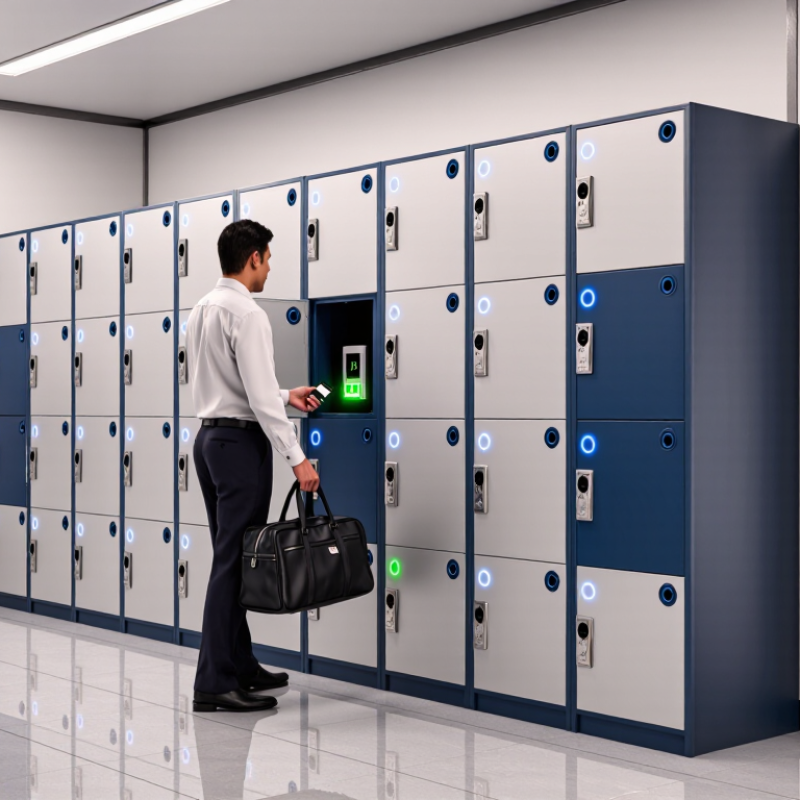
An RFID locker stores items behind electronically controlled doors. Each item carries a small RFID tag. A reader sends radio waves, captures the tag’s unique identification number, and passes it to the locker controller. Approved users then unlock a compartment through a card, mobile credential, PIN, or biometric check. The system records access time, locker number, and user identity.

It sounds simple. It is not always simple.

A practical RFID locker needs more than a strong reader. Antennas must limit cross-reading between nearby compartments. Software should manage permissions, alerts, audit logs, and offline access. Metal objects, liquids, and tightly packed items can weaken signals. Testing real items remains essential. Computer simulations may miss these problems.

Market evidence supports careful selection. Grand View Research valued the global RFID market at approximately 14.5 billion US dollars in 2023, with projected growth through 2030. MarketsandMarkets also forecasts strong RFID expansion, driven by asset tracking and automated operations. These figures show growing adoption, not guaranteed locker performance.

For 2026, compare read accuracy, tag compatibility, cybersecurity controls, battery backup, and maintenance access. UHF RFID suits multiple-item identification, while HF systems may offer tighter reading zones. Ask for independent testing data. Also check recovery procedures when networks fail. A cheaper locker can become expensive when one missed scan disrupts daily operations.

Which RFID Locker Features Matter Most in 2026?

Choosing an RFID locker in 2026 requires more than checking its reader range or screen design. The strongest systems identify users quickly, record access accurately, and protect stored belongings during busy periods. Test the locker with wet hands, crowded corridors, and different card positions. Real conditions expose weak antennas. A clear status light and quiet latch also matter, especially in schools, offices, and fitness facilities. Small details reduce confusion.

Security should be practical, not theatrical. Look for encrypted communication, role-based administration, tamper alerts, and detailed access logs. The system should continue operating safely during short network outages. Offline access needs careful review, because convenience can create accountability gaps. Ask how credentials are issued, removed, and replaced. Do not accept vague answers.

Maintenance features often decide the long-term cost. Choose compartments with replaceable locks, accessible wiring, and simple diagnostic tools. Battery backup is valuable, but its runtime should be measured under real usage. Accessibility also deserves hands-on testing. Check handle height, screen visibility, audio guidance, and wheelchair clearance. A technically advanced locker can still frustrate users. I would also question unnecessary facial recognition, since many sites need less data, not more. No checklist is perfect. Trial the system with staff and ordinary users before committing.

How to Match RFID Locker Types to Users and Environments

How to Choose the Best RFID Locker in 2026?

How to Match RFID Locker Types to Users and Environments

Choosing an RFID locker starts with user behavior, not the reader technology. A school needs assigned compartments, simple cards, and rounded edges. Students often carry wet coats, heavy bags, and sports equipment. Shared-use lockers suit gyms and public facilities, where users need short access periods. Clear occupancy indicators prevent unnecessary searching.

Office workers usually need personal lockers near desks or changing rooms. Small compartments may hold laptops, while ventilated units suit helmets and shoes. In warehouses, rugged lockers with gloves-friendly readers perform better. Dust, vibration, and limited network coverage can affect daily reliability. Offline access matters here.

Moist environments require corrosion-resistant materials and sealed electronic components. A locker beside a swimming pool faces different risks from one inside a quiet office. Check reader range with real cards, not only laboratory samples. Test doors repeatedly during busy periods. Slow unlocking becomes frustrating quickly.

A practical assessment should review installation space, cleaning routines, power access, and emergency opening procedures. Audit logs can support accountability, but access data should receive careful protection. One common mistake is selecting large compartments for every user. That wastes floor space and increases cost. Yet smaller lockers can disappoint commuters with bulky bags. The perfect fit rarely exists. Pilot testing reveals uncomfortable details, including glare on screens, noisy doors, or readers positioned too low. These small failures often matter more than impressive specifications.

How to Choose the Best RFID Locker in 2026?

Match RFID locker types to users and environments by comparing typical reading distance, access style, and installation conditions.

NFC and HF RFID are suitable for controlled, close-range access such as offices, hospitals, and personal storage. UHF RFID is better for hands-free identification, high-throughput environments, and lockers that need to recognize users from a greater distance. Actual performance depends on reader power, antenna design, tag placement, surrounding metal, liquids, and local regulations.

Reference ranges are based on commonly specified operating characteristics for proximity NFC, HF RFID, and UHF RFID systems under suitable installation conditions.

How to Compare Security, Capacity, Access, and Maintenance

Choosing the best RFID locker in 2026 requires comparison, not attractive screens. Security should include encrypted communication, role-based permissions, tamper alerts, and exportable access logs. The 2024 Data Breach Investigations Report found that human involvement appeared in 68% of reported breaches. Therefore, ask whether administrators can revoke credentials immediately. Check audit records during a live test. Convenience is not security.

Capacity means usable space, not the advertised compartment count. Measure real parcels, backpacks, and irregular items before selecting a layout. Compare small, medium, and oversized compartments. Access methods should match users and location. Cards may suit controlled workplaces, while mobile credentials can support temporary access. PINs remain practical, but shared codes weaken accountability. Accessibility also matters. A locker that is difficult to reach will create support requests.

Maintenance often decides the true cost. The 2024 Cost of a Data Breach Report placed the global average breach cost at 4.88 million dollars, reinforcing the value of reliable access controls. Still, that figure does not predict locker performance. Request battery-life evidence, replacement procedures, software update policies, and offline access behavior. Measure recovery time after a reader or network failure. Real facilities are messier. Dust, rushed users, and forgotten credentials will expose weak planning. I would not trust a perfect uptime claim without service records from comparable installations.

How to Evaluate Cost, Compliance, and Future Scalability

How to Choose the Best RFID Locker in 2026?

Cost should be measured across the locker’s full operating life, not only its purchase price. Include installation, RFID tags, software licenses, maintenance, network changes, and staff training. A cheaper unit may become expensive after integration problems appear. Ask for a five-year total-cost model. Test it with real parcels, gloves, poor lighting, and network interruptions. A clean demonstration proves very little.

Compliance needs equal attention. RFID lockers may store names, access times, delivery records, and device identifiers. The 2024 Data Breach Investigations Report analyzed 30,458 security incidents and 10,626 confirmed breaches. Select encrypted communication, role-based access, audit logs, retention controls, and documented data deletion. Check local privacy, accessibility, electrical, and workplace safety requirements. Compliance is not a certificate kept in a drawer. It requires evidence.

Tips: Request a live pilot before signing. Measure failed reads, collection time, recovery after outages, and support response. For future scalability, choose open APIs, documented data formats, modular readers, and remote diagnostics. Support for EPCIS 2.0 can improve interoperability across inventory systems. Plan spare capacity, but avoid paying for unused compartments. This balance is difficult. Forecasts can be wrong. A flexible design is usually safer than a perfect-looking specification.

dLED: retail LED lighting
Privacy Overview

This website uses cookies so that we can provide you with the best user experience possible. Cookie information is stored in your browser and performs functions such as recognising you when you return to our website and helping our team to understand which sections of the website you find most interesting and useful.