
How to Choose the Best Ceramic Vacuum Filter?
The Ceramic Vacuum Filter can look like a straightforward upgrade: a rotating ceramic disc, vacuum, and a drier filter cake. In practice, the right choice depends on the material being processed and the work the unit must do each shift. A filter that performs well with one mineral slurry may struggle with another. Fine particles, changing feed concentration, and abrasive solids all affect results.
Start with actual process conditions, not a brochure’s headline capacity. Check slurry flow, solids concentration, particle-size range, temperature, and chemical compatibility. Ask suppliers for test data using a representative sample. A useful trial measures throughput, cake moisture, filtrate clarity, and cleaning performance. Small details matter. A pore size that captures fines may also slow filtration or require more frequent cleaning. That trade-off is easy to underestimate.
Consider operating costs alongside purchase price. Review vacuum demand, wash-water use, ceramic plate life, spare-part access, and the skills needed for routine maintenance. Confirm how the filter responds to feed fluctuations and whether its controls fit the existing plant. Also verify the available installation space, connection requirements, and access for inspection or plate replacement. Talk with operators who will clean and inspect it; their experience can reveal practical issues a specification sheet misses. No single model is best for every site. The recommendation may change after a pilot test, and that is a reason to pause, not a failure. This guide explains the key selection criteria and questions to ask before committing to a Ceramic Vacuum Filter.
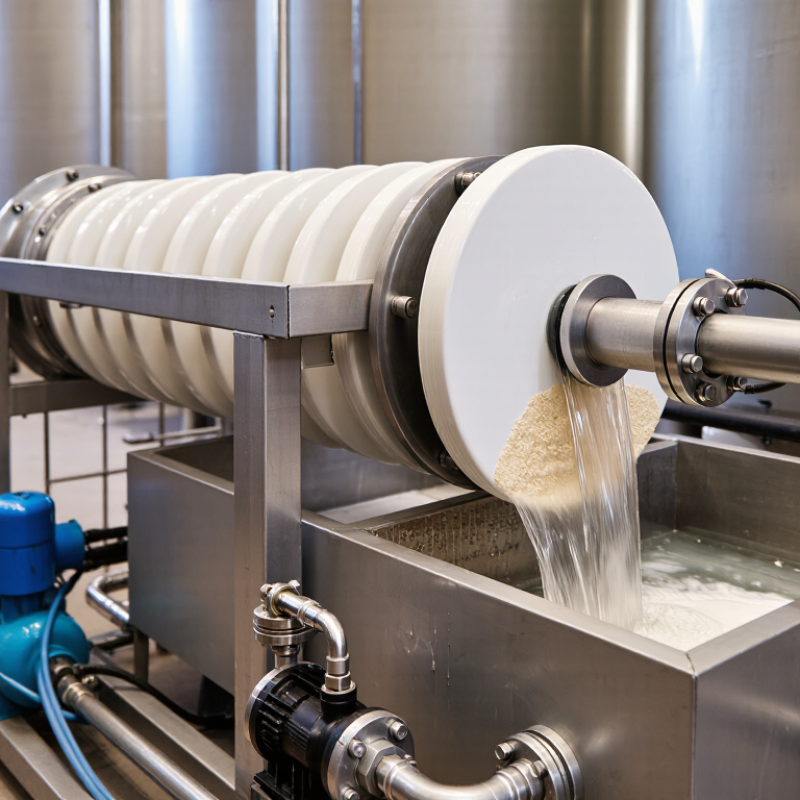
Identify Your Process Requirements and Filtration Goals
Choosing a ceramic vacuum filter starts with the slurry, not the machine. Record its solids concentration, particle-size range, temperature, and chemical composition. Note whether particles are abrasive or prone to clumping. These details affect filtration rate, cake formation, and equipment wear. Small changes in feed conditions can matter.
Set clear filtration goals. Is the priority higher throughput, a drier cake, or cleaner filtrate? You may not achieve all three at once. A finer cake can slow drainage, while faster operation may leave more moisture behind. Define acceptable targets, such as tonnes per hour, cake moisture, and filtrate clarity. Also check how the cake will be discharged and whether the ceramic elements can be cleaned with your available utilities.
Use representative slurry for testing whenever possible. Measure results under realistic feed conditions, including expected fluctuations. A short trial may miss problems that appear during longer operation, such as blinding or uneven cake release. Ask for data on cleaning cycles, vacuum demand, and maintenance intervals. Then compare it with your site’s actual constraints. It is easy to focus on a single performance number. I would still question any selection based only on a supplier’s best-case result; real process conditions are rarely that tidy.
| Process Requirement | What to Identify | Why It Matters | Selection Guidance |
|---|---|---|---|
| Feed slurry characteristics | Solids concentration, particle-size distribution, particle shape, and variation in feed composition. | These properties affect cake formation, filtrate flow, and the risk of blinding the ceramic media. | Use representative slurry samples for testing. Include expected changes in feed conditions, not just average values. |
| Required filtration capacity | Slurry feed rate, dry-solids production target, operating hours, and expected peak demand. | Filter capacity depends on both the amount of solids to process and how readily the slurry forms and releases a cake. | Base sizing on filtration tests or relevant operating data. Allow for realistic feed variability and planned maintenance. |
| Target cake moisture | Maximum acceptable moisture in the discharged cake and any downstream drying or handling limits. | Residual moisture affects transport, product handling, drying energy, and the suitability of the cake for its next process step. | Test the actual slurry under representative operating conditions; cake moisture is influenced by particle properties and cycle settings as well as vacuum. |
| Filtrate quality | Permitted suspended solids, clarity requirements, and whether filtrate will be reused, treated, or discharged. | Filtrate quality can affect water reuse, downstream equipment, and compliance with site-specific discharge requirements. | Confirm the required limit and verify filtrate samples during testing. Include a plan for handling filtrate that does not meet the target. |
| Particle size and media compatibility | Fine-particle fraction, abrasive content, and whether solids tend to pass through or block the media. | Fine or poorly retained particles may reduce filtrate clarity, while deposits in media pores can reduce permeability. | Evaluate media pore structure and cleaning response with the process slurry; do not select media based on nominal particle size alone. |
| Slurry chemistry and temperature | pH, dissolved chemicals, corrosive constituents, process temperature, and cleaning agents. | Chemical and thermal conditions can affect the ceramic elements, seals, piping, and other wetted components. | Check material compatibility across normal operation, cleaning, and upset conditions with the equipment supplier. |
| Cake washing requirements | Whether soluble impurities must be removed, required wash-water quality, and acceptable wash-water use. | Washing can improve cake purity but adds liquid load and may affect cycle time, moisture, and filtrate handling. | Test wash effectiveness and water consumption using the intended wash sequence and cake depth. |
| Operating cycle and automation | Required filtration, drying, discharge, and cleaning sequence; desired level of operator involvement. | Cycle timing and control affect production consistency, labor needs, and the response to changes in feed conditions. | Confirm that instrumentation and controls can monitor key variables such as vacuum, feed conditions, and cycle status. |
| Cleaning and media regeneration | Frequency of permeability loss, available cleaning utilities, and acceptable cleaning downtime. | Accumulated fines or deposits can reduce filtration performance if cleaning is ineffective or impractical. | Verify cleaning procedures, utility requirements, and recovery of permeability through repeated process-representative tests. |
| Plant utilities and installation | Available vacuum capacity, power, wash water, drainage, floor space, and access for maintenance. | Insufficient utilities or restricted access can limit performance and make routine service more difficult. | Check utility loads, layout, lifting access, and connections before final equipment selection. |
| Safety and environmental requirements | Dust, exposure, spill, noise, and process-specific containment risks, plus applicable site rules. | Safe operation depends on the complete installation and handling system, not only on the filter itself. | Include guarding, containment, safe access, and applicable local requirements in the project specification. |
| Acceptance criteria | Measurable limits for throughput, cake moisture, filtrate quality, availability, and utility consumption. | Clear criteria make it possible to compare options and verify performance after installation. | Define test methods, sampling points, operating conditions, and pass/fail limits before trials or procurement. |