
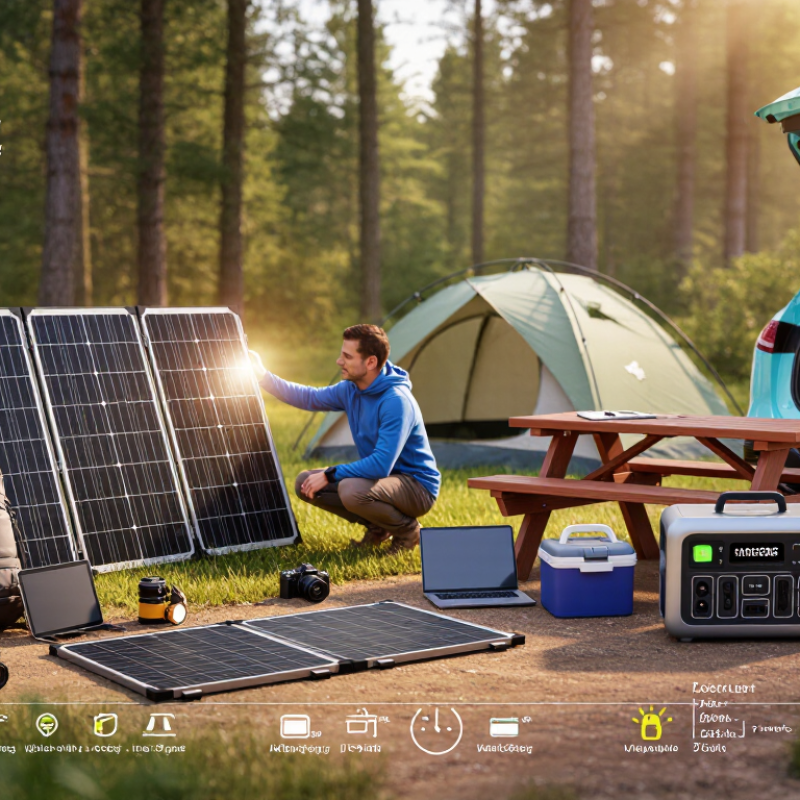
How to Choose Portable Solar Panels for Camping

Choosing Portable Solar Panels For Camping begins with a realistic question: what must your power system run each day? A phone, headlamp, and camera need far less energy than a cooler, laptop, or CPAP machine. Write down each device, its wattage, and expected hours of use. Small details matter. A 20,000 mAh power bank may seem powerful, yet repeated charging can quickly drain a compact panel.

Will Prowse, a widely recognized solar educator and off-grid power reviewer, explains, “A solar panel’s rated output is measured under ideal conditions, not beside every campsite.” That reminder should shape your decision. A 100-watt panel may produce much less under tree cover, afternoon haze, dust, or poor positioning. Direct sunlight helps. A tilt angle helps more than many beginners expect.

This guide examines panel wattage, folded size, weight, charging ports, weather resistance, and compatibility with portable power stations. It also considers setup time, because a complicated system can remain inside the car. That happens. A lightweight panel with modest output may suit a weekend hiker better than a large model that stays unused.

Expect trade-offs. Higher capacity usually means more weight, while ultra-compact designs may charge slowly. Monocrystalline panels often provide strong efficiency in limited space, but efficiency alone does not guarantee better camping performance. Your climate, campsite, battery, and daily habits remain important. The best choice is not the most impressive specification sheet. It is the panel you can carry, position, protect, and use consistently.

How to Choose Portable Solar Panels for Camping

Define Your Camping Power Needs and Solar Charging Goals

Before choosing a portable solar panel, define your actual camping power needs. List every device you plan to charge, including phones, headlamps, cameras, and small coolers. Write down their watt-hours. Then estimate how often you will use them each day. A phone may need little energy, while a cooler can consume power continuously. Camping days vary. Cold mornings, long drives, and cloudy weather change the calculation. I once planned for clear skies and underestimated battery use. That mistake mattered.

Your charging goal also shapes the panel size. If you only need to refresh a phone, a compact panel may be enough. For cameras, GPS devices, and several lights, choose more output and pair it with a portable battery. A battery stores energy during bright hours for evening use. Do not rely on the panel’s rated output alone. Real-world sunlight is weaker in shade, dust, or low angles. In open shade, output may drop sharply. That gap is normal.

Check the panel’s weight, folded size, cable length, and weather resistance. A compact setup is easier to carry but may charge more slowly. A larger panel can save time, though it may become awkward on a crowded campsite. I prefer testing the complete system at home before leaving. Measure charging performance at morning and midday. Leave extra capacity for poor weather and unexpected device use. Forecasts are useful, but never perfect.

Compare Portable Solar Panel Types and Power Ratings

Portable solar panels differ in efficiency, weight, flexibility, and real-world output. Folding monocrystalline panels usually provide strong power from a smaller surface. They suit campers carrying phones, cameras, and compact power stations. Thin-film panels are lighter and perform better in weak, scattered sunlight. However, they often need more space. Rigid panels can deliver steady output, but they are less convenient beside a tent.

Power ratings require careful reading. A 100-watt panel rarely produces 100 watts throughout the day. The rating reflects controlled laboratory conditions, not a cloudy campsite. Heat, shade, dust, and poor positioning reduce performance. A 100-watt panel may produce roughly 50 to 80 watts during bright outdoor conditions. That figure can fall sharply under tree cover.

Match the panel to your actual equipment. A 40-watt panel may maintain a phone and small lamp, while a 100-watt model better supports a larger battery. Check the panel’s voltage, current, connector, and charge-controller requirements. During one campsite test, moving a panel every hour improved charging noticeably. My first estimate was too optimistic because I ignored morning shadows. I still misjudge winter sunlight sometimes. Leave extra capacity for poor weather and unexpected charging needs.

Check Size, Weight, Foldability, and Camping Portability

How to Choose Portable Solar Panels for Camping

Size matters before wattage. Fraunhofer ISE’s Photovoltaics Report 2024 places commercial crystalline-silicon modules near 20–23% efficiency. Higher efficiency can reduce panel area, but it does not guarantee easy transport. Measure the packed panel against your backpack, vehicle compartment, and campsite table. A wide panel may work well beside a van but become awkward on a narrow trail. Check the open dimensions too. Shade from trees can quickly reduce useful charging.

Weight should match your actual route. A lightweight panel suits hiking, while a heavier folding model may offer a more stable stand and stronger protection. Foldability is not merely a storage feature. Look for reinforced hinges, secure cable storage, and a surface that opens without blocking your cooking area. My own mistake was choosing a compact panel with a stiff hinge. It fit beautifully, then fought every setup.

NREL’s PVWatts guidance accounts for temperature, wiring, inverter, and other system losses, reminding campers that rated output is not field output. Test the panel outdoors before leaving. Note its packed size, setup time, and cable reach. A panel that needs constant repositioning may deliver less energy than its specifications suggest. Small details matter. You may value a lighter design after one steep kilometer.

Evaluate Weather Resistance, Connections, and Device Compatibility

How to Choose Portable Solar Panels for Camping

Weather resistance matters more than a panel’s advertised wattage. During camping trips, sudden rain and damp grass can expose weak seams quickly. Look for a clear IP rating, sealed connectors, reinforced corners, and durable cable covers. Water resistance does not mean unlimited waterproofing. Keep the panel elevated, avoid puddles, and dry it fully before folding. I once packed a panel while its fabric was still damp. That shortcut created an unpleasant odor and may have shortened its life.

Connections must match your charging equipment. Check the panel’s voltage, current, connector type, and polarity before buying. A loose plug can interrupt charging when wind moves the cable. Some panels include USB outputs, while others require a compatible charge controller or power station. Never assume two connectors are electrically suitable because they physically fit. Read the technical label and the equipment manual. Device compatibility also depends on sunlight, battery limits, and charging protocols. A phone may charge slowly under thin clouds. Larger devices can require steadier power than a small folding panel provides.

Select a Panel That Fits Your Budget and Camping Conditions

How to Choose Portable Solar Panels for Camping

Select a panel that fits your budget and camping conditions, not just its advertised power. A 100-watt panel may suit a weekend campsite with steady sunlight. However, shade, clouds, and short winter days can reduce its output sharply. For phones, lights, and a small camera, a lower-wattage panel may be enough. Check the panel’s weight, folded size, cable length, and weather resistance before buying.

I once chose a panel by wattage alone. It worked well in open sunlight but became awkward near a forest campsite. Its heavy frame also took valuable space in my backpack. A lighter folding panel can cost more, yet it may be practical for hiking trips. For car camping, extra weight matters less, so a larger panel and battery can offer better value. Leave room in your budget for a compatible power station or battery.

Think about your daily energy use. List each device and its charging time. Then allow extra capacity for poor weather. A panel rated at 100 watts rarely produces that amount continuously outdoors. Placement matters too. Reposition it every few hours when possible. I still underestimate cloudy mornings sometimes. That mistake reminds me to carry a small backup battery, especially when reliable communication or navigation is important.

How to Choose Portable Solar Panels for Camping

Estimated daily energy output by panel size and camping weather conditions

Larger panels generally provide more usable energy but cost more and require additional space and weight capacity. Estimates assume 5 peak-sun-hours per day, with typical system losses included: approximately 85% output in clear weather, 55% in partly cloudy weather, and 25% in overcast weather. Actual results vary with season, shade, panel angle, and temperature.

dLED: retail LED lighting
Privacy Overview

This website uses cookies so that we can provide you with the best user experience possible. Cookie information is stored in your browser and performs functions such as recognising you when you return to our website and helping our team to understand which sections of the website you find most interesting and useful.