China Top 10 Enclosed Circuit Breaker Manufacturers?
Choosing an Enclosed Circuit Breaker manufacturer in China takes more than comparing prices or polished product photos. Buyers need to understand how each supplier designs, tests, and supports equipment for real installation conditions. A breaker may sit inside a compact control cabinet, where heat, dust, vibration, and limited wiring space all matter.
This guide introduces ten Chinese manufacturers and the factors that can help buyers assess them. These include product range, rated current and voltage options, enclosure materials, terminal access, customization, and after-sales support. Details matter. A clear datasheet, traceable test records, and responsive technical assistance can tell you more than a broad performance claim. Still, published specifications do not reveal everything about production consistency or service quality. Ask suppliers for current documentation, sample inspection details, and references relevant to your application.
The list should be treated as a starting point, not a universal ranking. Supplier capabilities change, and the right choice depends on the project, operating environment, and destination market. Some manufacturers may suit standard low-voltage panels; others may offer stronger engineering support for specialized requirements. Verify certifications and test reports independently, and confirm that the selected model matches the intended installation. It takes careful comparison. Even a small difference in enclosure dimensions or terminal layout can affect cabinet assembly and maintenance.
What Is an Enclosed Circuit Breaker?
What Is an Enclosed Circuit Breaker?
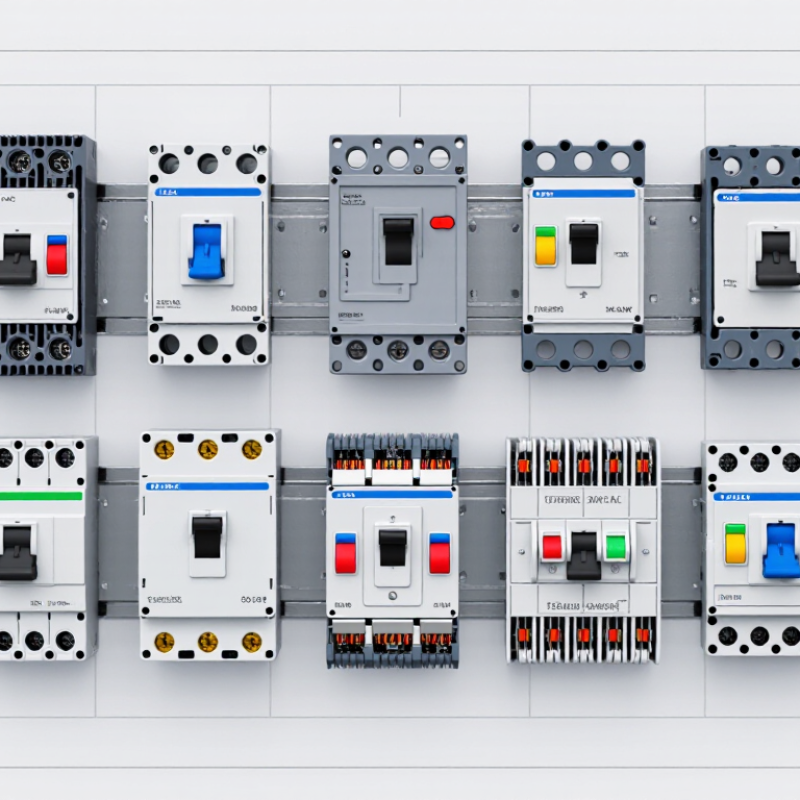
An enclosed circuit breaker is a switching and protective device housed in an insulating or metal enclosure. The enclosure helps shield people from live parts and protects the mechanism from dust, accidental contact, and impact. Inside, a trip unit detects excessive current and opens the contacts during an overload or short circuit. The breaker can also be operated manually to isolate a circuit for inspection. Common designs use thermal-magnetic or electronic trip mechanisms. Their ratings must match the circuit’s voltage, current, and expected fault level; “enclosed” alone does not mean suitable for every installation.
For low-voltage equipment, IEC 60947-2 sets requirements for circuit breakers, including operating and testing provisions. NFPA’s Electrical Fires report estimates that U.S. fire departments responded to an average of 46,700 home fires involving electrical failure or malfunction each year from 2015 to 2019. Those figures cover many causes, not just breaker issues, so a breaker should not be treated as complete fire protection. Correct conductor sizing, secure terminals, and regular inspection still matter. A small loose connection can heat up quietly.
Tips: Check the nameplate for voltage, current, and interrupting rating. Keep the enclosure closed, and have a qualified electrician investigate repeated trips rather than simply resetting the breaker. Mistakes happen—even with a correctly chosen device.
How China's Enclosed Circuit Breaker Industry Is Organized
China’s enclosed circuit breaker industry is organized as a layered supply network, not a simple list of factories. At its center are manufacturers that design, assemble, and test complete breakers for low-voltage distribution systems. Around them are suppliers of molded cases, contacts, operating mechanisms, trip units, and insulation materials. These parts affect heat control, switching performance, and service life. Some producers focus on high-volume standard models; others handle customized ratings or project-specific requirements. The “top ten” can therefore mean different things, depending on whether buyers compare output, technical range, exports, or service capacity.
Tips: Check the rated current, breaking capacity, and operating conditions against the actual installation. Ask for test records and clear product documentation. A polished catalog is not enough.
Regional manufacturing clusters can shorten sourcing routes and make component supply more accessible, but location alone does not prove quality. Buyers should review factory testing, incoming material checks, traceability, and after-sales support. Ask how a producer handles temperature rise, repeated switching, and fault interruption tests. Compare specifications on the same basis. It is easy to overlook enclosure dimensions or terminal compatibility, and that mistake can complicate installation. Rankings are useful starting points, not substitutes for technical review.
China’s Enclosed Circuit Breaker Industry: Understanding the Product Scope
China’s manufacturers serve low-voltage applications across residential, commercial, and industrial markets. This chart shows the maximum circuit voltage covered by IEC 60947-2, a standard relevant to many low-voltage circuit breakers. These are standard limits—not sales figures, market shares, or a company ranking.
Source: IEC 60947-2:2024.
What Criteria Help Compare Chinese Manufacturers?
Comparing Chinese enclosed circuit breaker manufacturers starts with matching technical details to the actual installation. Check rated voltage, current, pole configuration, and short-circuit breaking capacity. These figures should align with the system design, not just appear impressive in a catalogue. Small details matter. Ask whether the enclosure, terminals, and operating mechanism suit the expected temperature, dust, and mounting conditions. A clear datasheet helps, but it cannot replace a sample inspection.
Look for test reports tied to the exact model and configuration being quoted. Verify the applicable standards, report date, and issuing laboratory rather than relying on a generic certificate image. Ask how production batches are inspected and whether serial numbers can be traced to test records. Factory audits can reveal useful details, such as calibration routines and incoming-material checks. Still, one visit is only a snapshot. Compare warranty terms, spare-part availability, response times, and realistic lead times in writing.
Tips
Request a sample and check its dimensions, markings, terminal finish, and operating feel. Ask for a quotation that lists options and exclusions. Compare like with like; small specification differences can change both performance and price. Some claims may sound polished. Verify them before deciding.
Profiles of Ten Leading Chinese Manufacturers
Profiles of ten leading Chinese enclosed circuit breaker manufacturers should compare capabilities, not repeat marketing claims. A useful profile examines product range, rated current, breaking capacity, enclosure protection, and intended installation conditions. These details help buyers distinguish equipment for a compact control cabinet from breakers designed for demanding industrial panels.
Factory evidence matters. Look for documented routine testing, traceable inspection records, and clear technical drawings. Ask how manufacturers verify temperature rise and switching performance, and whether test reports match the exact model offered. Small details count. A tidy enclosure, readable terminal markings, and accessible service parts can save time during installation. Yet a polished catalog proves little by itself. I would want to check how well stated specifications align with real test documentation.
The ten profiles can also compare customization, export experience, lead times, and after-sales technical support. Some manufacturers may offer broad product lines, while others focus on particular current ranges or applications. That difference is not automatically a weakness. It does make direct comparisons harder. Buyers should confirm operating voltage, short-circuit requirements, ambient conditions, and mounting dimensions before evaluating price. A profile is most reliable when it identifies both a manufacturer’s strengths and the evidence still needing verification.
How to Choose an Enclosed Circuit Breaker Manufacturer in China
How to Choose an Enclosed Circuit Breaker Manufacturer in China
Choosing a manufacturer takes more than comparing prices and catalog photos. Start with the breaker’s rated current, voltage, pole count, and required breaking capacity. Then ask whether the proposed model has test reports matching those exact specifications. A certificate for a different product range is not enough. Check enclosure material, ingress protection rating, terminal design, and temperature-rise results. These details matter in a dusty workshop or a crowded electrical cabinet.
Factory capability deserves a close look. Ask how incoming materials, contact assembly, and final testing are controlled. Request sample inspection records and, where practical, arrange a factory audit or third-party product inspection. I would also check how the supplier handles design changes and replacement parts. A polished catalog is not proof of consistent production. I still find this easy to overlook when delivery dates are tight.
Tips: Send the same technical checklist to each supplier. Compare test evidence, not just quotations. Confirm model numbers on reports, samples, and labels. Ask for written clarification when an answer feels vague. Be cautious: one extra review can prevent a costly mismatch.
