
A Boat Camera serves as an essential tool for marine enthusiasts. These cameras capture stunning moments on the water. They also provide safety and security for boaters.
The technology behind a Boat Camera is fascinating. Typically, it uses high-definition video to record surroundings. This can include fishing trips, sailing adventures, or family outings. The compact design allows easy mounting on boats. However, not all cameras perform well in harsh marine environments. Some may struggle with water resistance and durability.
Using a Boat Camera can enhance your experience. It allows you to document memories and wildlife encounters. Yet, it's important to reflect on your needs before purchase. Finding the right camera can be a challenge. You need to consider features, price, and usability. Instead of rushing, take time to make a wise decision.
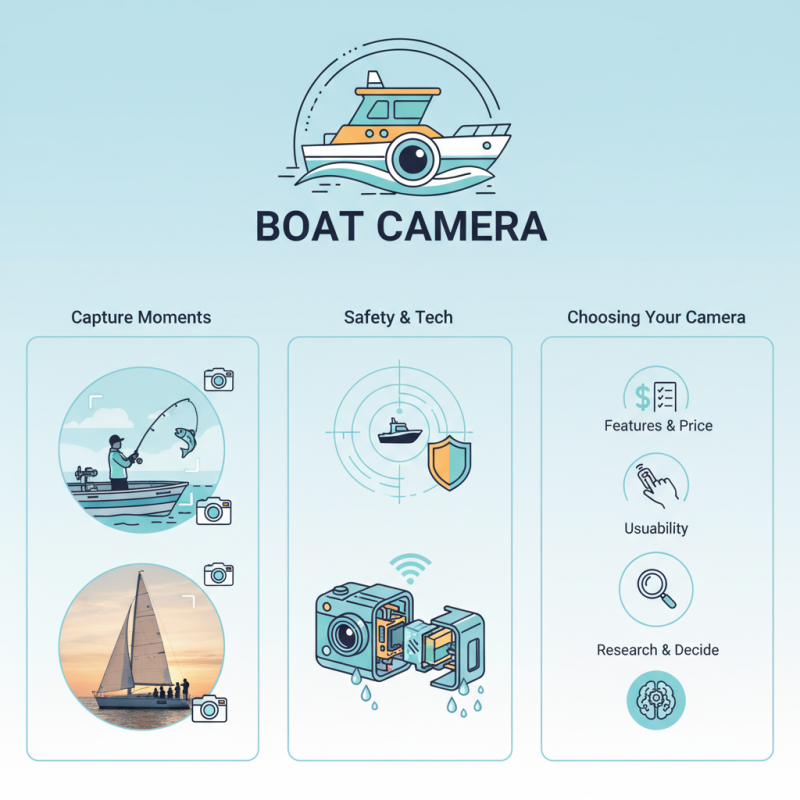
A boat camera is a specialized device designed to capture images and videos while on the water. These cameras are essential for monitoring navigation, fishing activities, and documenting marine adventures. Research shows that the use of onboard cameras has increased by over 30% among recreational boaters in recent years. This rise reflects a growing interest in safety and content creation.
These cameras often feature waterproof casings and high-resolution capabilities. Many models come equipped with wide-angle lenses to capture more of the surrounding scenery. Some have built-in Wi-Fi, allowing users to stream footage directly to their smartphones. However, battery life can be limited in challenging conditions. It's important for users to consider how weather impacts performance.
While boat cameras enhance experiences, they also raise questions about privacy. Histories of unwanted footage have sparked discussions about rights on the water. An increasing number of boaters express concerns regarding surveillance from both devices and drones. As the demand for boat cameras increases, so do these critical conversations about their ethical use. Effective communication and user awareness are vital in navigating these issues.
Boat cameras are essential tools for many boating enthusiasts. They come in various types, each designed for different purposes. For instance, onboard cameras are often used for safety and monitoring. They can capture stunning footage of your adventures. Many boat owners appreciate these cameras for their ability to record in high definition.
Another popular type is the action camera. These are compact and usually waterproof. They are perfect for capturing dynamic moments while navigating through waves. You can mount them on various parts of your boat. However, the video quality can sometimes be inconsistent, especially in challenging conditions. It’s essential to consider where you place them for optimal results.
Some boat cameras are designed specifically for fishing. They feature advanced technology like sonar integration. This allows anglers to see underwater action in real-time. However, they can be complicated to set up and may require practice. Finding the right angle or adjusting settings might take time and patience.
| Camera Type | Resolution | Field of View | Waterproof Rating | Connectivity |
|---|---|---|---|---|
| Action Camera | 4K | 170° | IP68 | Wi-Fi, Bluetooth |
| Panoramic Camera | 1080p | 360° | IP67 | Wi-Fi |
| Underwater Camera | 720p | 120° | IP68 | No Connectivity |
| Fish Finder Camera | 480p | No specific FOV | IP67 | Wireless |
| Dash Camera | 1080p | Wide | N/A | USB, HDMI |
When choosing a boat camera, key features and specifications matter significantly. Look for waterproof ratings. A good option should have an IP68 rating, ensuring it resists water at depths. This keeps your investment safe during all boating adventures. Compact design is also important. A lightweight camera makes it easier to mount or carry.
Consider the video resolution. At least 1080p is ideal. This resolution provides clarity without overwhelming storage. Some advanced models even offer 4K. Keep an eye on battery life too. Extended usage often demands higher capacity batteries. Always check user reviews for real-life performance.
Tip: Ideal lenses and angles are essential. Cameras with adjustable wide-angle lenses capture more without distortion. Yet, not all wide angles work well in every scenario. Some distort images at the edges.
Check for connectivity options. Wi-Fi and Bluetooth capabilities enhance usability. These features let you share footage quickly. Pairing your boat camera with smart devices can augment your shooting experience. Still, signal issues can sometimes arise outside of cellular coverage.
Boat cameras are designed to capture stunning footage in wet environments. These cameras are waterproof, allowing them to function well on boats. They often feature high-definition (HD) capabilities, ensuring sharp images. Most boat cameras have protective casings, which helps prevent water damage. The lenses are specially coated to resist glare and reflections from water.
When looking for a boat camera, consider its mounting options. A secure mount is crucial to capture steady footage. You may want to test the camera in different conditions, as light conditions can change rapidly on the water. This can impact your footage quality. Adjust settings to adapt to reflections or glare.
Here are a few tips for better footage: Ensure your camera is fully charged before setting out. A charged battery means you're ready for spontaneous moments. Another tip is to clean the lens regularly; water spots can diminish image clarity. Lastly, experiment with angles. Different perspectives can make your footage more dynamic. Don't shy away from trying new approaches even if you feel uncertain.
Boat cameras have become essential tools for various applications. Whether for fishing, navigation, or safety, these cameras provide unique benefits. They offer real-time views of the surrounding water, allowing boaters to detect obstacles and improve situational awareness.
One major application is in fishing. Anglers can monitor underwater activity. This helps to identify where the fish are biting. A well-placed camera can reveal schools of fish unseen by the naked eye. The excitement of catching fish increases with the help of technology.
For safety, boat cameras enhance security. They can deter theft and vandalism while the boat is docked. This is important for boat owners. Recordings can provide evidence if incidents occur. However, not all areas may have reliable Wi-Fi. This can hinder remote monitoring.
Tips: Ensure your camera is waterproof. This protects it from splashes and underwater exposure. Regularly clean the lens for clear images. Dirty cameras can lead to missed opportunities. Keep your camera’s software updated for best performance. Technology evolves, and so should your gear.
