What Are the Best Types of Giant Lanterns in 2026?
Choosing the best giant lanterns in 2026 means balancing visual impact, build quality, lighting, and the space available. A towering dragon can command a festival lawn, while a smaller animal lantern may feel more inviting along a narrow garden path. The right choice depends on the audience and setting. There is no universal winner.
Useful evidence starts with the light source. The U.S. Department of Energy reports that LEDs use at least 75% less energy and last up to 25 times longer than incandescent bulbs. Those figures compare bulbs, not complete lantern installations, so frame them carefully. Still, they help explain why LED-lit designs are practical for extended displays. As light artist James Turrell put it, “I like to work with light, not as a medium for something else, but as a thing in itself.” For lantern makers, that idea matters: the glow should reveal the form, not wash out its colors or details.
This guide compares traditional silk lanterns, illuminated animal figures, walk-through displays, interactive designs, and custom cultural themes. You’ll see where each type works best, what materials and lighting deserve a closer look, and which trade-offs can be easy to miss. Details matter. A huge frame may impress by day but lose definition after dark. Some categories overlap, too; a walk-through lantern can also be an interactive installation. The comparisons ahead offer practical criteria—not a promise that every design suits every venue.
How Giant Lanterns Are Classified by Design and Purpose
What Are the Best Types of Giant Lanterns in 2026?
How Giant Lanterns Are Classified by Design and Purpose
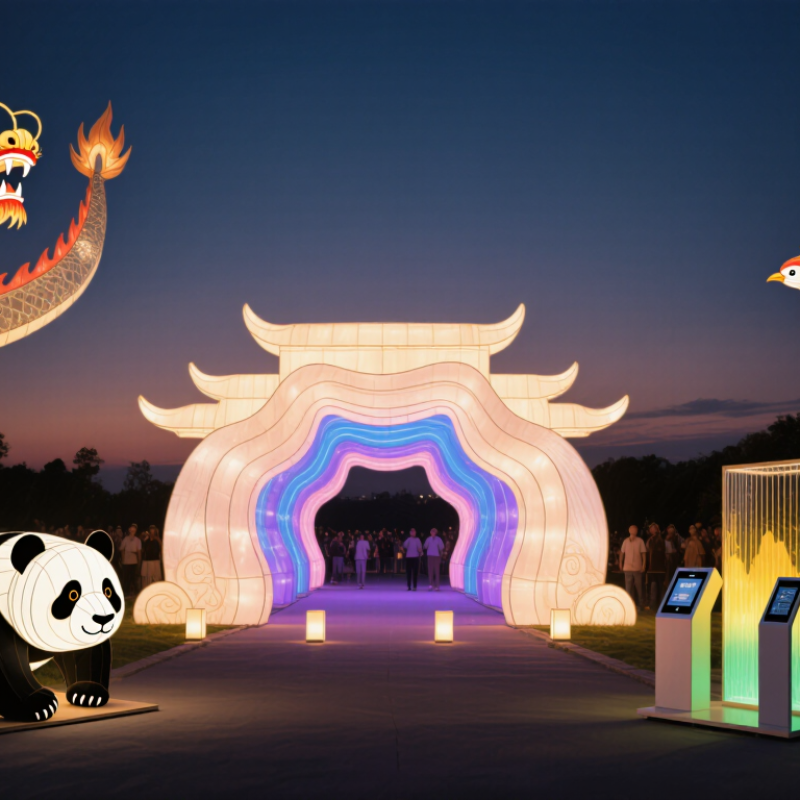
Giant lanterns are best classified by how they are shaped and what visitors do with them. Frame-based lanterns use a visible structure covered with translucent fabric or panels. They suit animal figures, flowers, and familiar storybook forms. Sculptural lanterns focus on flowing lines, layered surfaces, or oversized abstract shapes. Their appeal often comes from viewing them from several angles.
Scale changes everything.
Purpose changes the design. Walk-through lanterns create routes beneath arches or through larger illuminated scenes, so clear paths and sturdy supports matter. Display lanterns are built to be viewed from a distance; bold outlines and strong color contrasts help their shapes read at night. Interactive installations may include touch-sensitive or motion-responsive elements, but these need careful testing and supervision. Not every elaborate feature improves the experience.
For outdoor events, planners should consider wind exposure, ground conditions, access, and the weight of each section. A design that looks beautiful in a photograph may feel crowded when visitors gather around it. Indoor displays can use delicate details, while exposed locations usually benefit from simpler forms and secure anchoring. There is no single best type: the right choice balances visual impact, visitor flow, and practical setup.
Sometimes a quieter design works better than a taller one.
Traditional Giant Lanterns for Festivals and Cultural Events
What Are the Best Types of Giant Lanterns in 2026?
Traditional Giant Lanterns for Festivals and Cultural Events
Traditional giant lanterns can turn a festival entrance into a vivid cultural landmark. Choose forms rooted in local stories, such as illuminated dragons, zodiac animals, flowers, or familiar architectural motifs. At night, layered silk or translucent panels reveal rich color, while visible frames and hand-painted details give visitors something to examine up close. Scale matters, but a huge lantern without a clear story can feel oddly empty. Craft and context matter more.
Festival planning also reflects growing interest in travel experiences. UN Tourism’s World Tourism Barometer reported approximately 1.4 billion international tourist arrivals in 2024, reaching 99% of 2019 levels. This is not a lantern-specific measure, but it shows the scale of returning travel that cultural events can serve. Traditional lantern displays work especially well along processional routes, beside performance areas, and around community gathering spaces. Local makers can help keep designs meaningful; small imperfections may even show the human work behind them.
Tips: Match lantern height to viewing distance, and leave clear sightlines around performances. Use weather-resistant materials and inspect joints before opening. Keep colors and symbols locally appropriate. A modest, well-made piece often tells its story better than an oversized display.
LED Giant Lanterns for Energy-Efficient Displays
LED giant lanterns can create a bright focal point without the high electricity demand of traditional incandescent lighting. Their light-emitting diodes produce vivid color while using less power than comparable incandescent sources. For a festival courtyard, that can mean more lanterns on a carefully planned circuit. Less power, less heat. The difference matters when displays run for several hours each evening.
Efficiency still depends on the whole setup. Choose lanterns with appropriately rated LED modules, sturdy wiring, and weather protection suited to the location. A large silk lantern may look brilliant in daylight but appear uneven after dark if its light source sits too close to the fabric. Diffusers and well-positioned LEDs help soften bright spots. Check brightness in the actual display area, not only in a product photograph.
Power planning deserves attention. Estimate the combined wattage, confirm the capacity of the power supply, and keep connections protected from moisture. A dimmer can reduce output during quieter hours, though not every LED system dims smoothly. That detail is easy to miss. Even efficient lanterns need inspection: loose connectors, damaged cables, or a failing module can spoil an otherwise beautiful display. Test one lantern before assembling a large installation, and allow time for adjustments. The first layout may not be the best one.
Interactive Giant Lanterns for Immersive Experiences
In 2026, the best giant lanterns do more than decorate a venue. They invite visitors to move through the display and notice its details. Walk-through tunnels can turn a garden path into a glowing corridor. Oversized animals, flowers, or fantastical creatures make memorable viewing points. Interactive lanterns add another layer. Gentle color changes or motion-triggered lights can make visitors feel part of the scene. Keep the response clear and intuitive. Not every interaction will delight everyone, and effects can feel repetitive when every lantern behaves alike.
Tips: Test sensors in daylight and after dark. Leave enough space around interactive pieces for visitors to pause without blocking paths. Use simple cues, such as a light that brightens when someone approaches. Small details matter.
For a more immersive experience, combine different interaction styles rather than filling every corner with technology. Pair a responsive lantern with quieter, softly lit sculptures nearby. This gives visitors room to pause and take in the setting. Check that controls respond consistently during busy periods, since a sensor that misses repeated movements can frustrate people. The technology does not need to be elaborate. A thoughtful sequence of light, movement, and rest often feels more engaging than constant spectacle.
How to Choose the Best Giant Lantern Type in 2026
Choosing a giant lantern starts with its setting, not its appearance. For outdoor festivals, a weather-resistant fabric lantern over a reinforced frame can handle light wind and repeated use. A large, intricate silk lantern suits sheltered courtyards, where guests can see its details up close. Inflatable lanterns are easier to transport, but their softer outlines may look less traditional. Every type has a compromise.
Measure the installation area and the route into it. A lantern that fits the plaza may not pass through a narrow gate. Check ceiling height, ground firmness, power access, and expected wind exposure. Size matters. Ask how the lantern is assembled, secured, and maintained, and request clear specifications for materials and lighting. A dramatic silhouette is not enough if setup requires equipment the venue lacks.
For a more detailed effect, choose a design with visible color and shape from the main viewing distance. Small painted details can disappear across a wide field. Warm internal lighting often reveals texture, while brighter light can flatten it. Test a sample at dusk if possible. That step is easy to skip, and sometimes regretted. Also consider storage and repair access, especially for annual events. The perfect type is the one that fits the site, audience, and practical limits—not merely the largest option.
