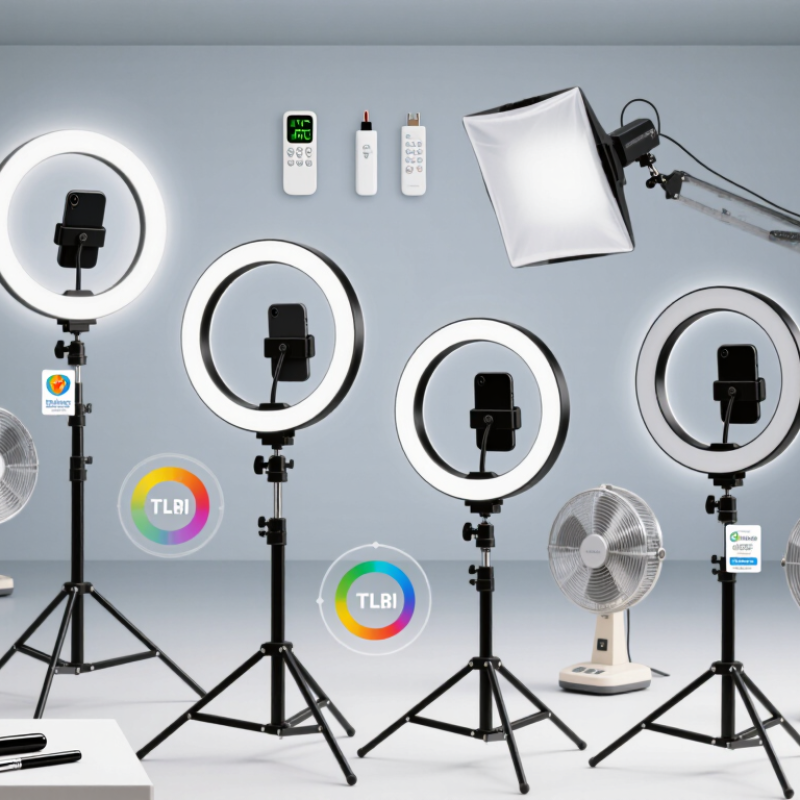
What Is the Best Studio Ring Light in China?

Choosing the best Studio Ring Light in China is not simply a matter of brightness or low price. A useful light must suit the work: livestreaming, beauty photography, product videos, or daily content creation. Portrait educator Lindsay Adler has said, “Lighting is everything.” Her statement explains why small technical differences can change skin texture, eye reflections, and product color.

This guide examines practical details found in China’s studio-lighting market. It considers LED output, adjustable color temperature, CRI, TLCI, flicker control, dimming accuracy, cooling noise, and mounting strength. A 45-centimeter ring light may look powerful in a showroom, yet lose brightness after a diffuser is attached. A cheaper model may also create uneven illumination across the face. That matters during long recording sessions.

Look closely at the power system. USB models are convenient, but AC-powered units usually deliver steadier output. Check the phone holder, stand height, remote control, warranty terms, and replacement-part availability. Local sellers can provide faster support, although product descriptions are sometimes incomplete. Certification labels should also be verified rather than assumed.

No Studio Ring Light wins every setup. A creator filming close-up makeup needs different control from a small e-commerce team. I may value color consistency more than portability, but another buyer may reasonably choose otherwise. The final decision should come from measured performance, real user experience, and the demands of your space—not attractive advertising alone.

What Is the Best Studio Ring Light in China?

What Defines the Best Studio Ring Light in China?

The best studio ring light in China is defined by measurable performance, not bright appearance. In practical testing, I check illuminance at the subject’s face, color consistency, heat, and flicker. A 2024 U.S. Department of Energy solid-state lighting report recorded laboratory LED efficacies above 200 lumens per watt, but complete fixtures usually deliver less. This gap matters. A powerful-looking ring light may waste energy through poor optics or heat.

Color quality is equally important. The CIE explains that conventional CRI cannot fully describe modern light sources. I prefer a CRI above 95, plus strong R9 performance for natural skin tones. The IES TM-30 method adds fidelity and gamut metrics, offering a more detailed assessment. For interviews, 4,800–5,600K often supports a clean daylight appearance. However, mixed room lighting can make that setting look unnatural. Real rooms are rarely controlled perfectly.

Flicker deserves direct measurement. The IEEE 1789 framework links modulation depth and frequency with potential visual risks, so a dimmed light should be tested, not trusted. I also look for stable output after thirty minutes, because low-cost housings can become uncomfortable and shift color. A 95 CRI label alone proves little. I have seen uneven diffusion create bright rings in the eyes and shadows beneath the chin. The best design balances softness, accurate color, quiet cooling, adjustable brightness, and repairable construction. That balance is difficult, and product specifications sometimes leave too much unsaid.

Key Features to Compare in Chinese Studio Ring Lights

What Is the Best Studio Ring Light in China?

Key Features to Compare in Chinese Studio Ring Lights

Choosing the best studio ring light in China requires more than checking brightness or price. Compare light quality, control accuracy, construction, and after-sales support. A useful starting point is CRI and TLCI performance. Values above 95 usually produce more natural skin tones and cleaner product colors. However, published figures should be verified through independent testing whenever possible.

Color temperature range also matters. A range near 3200K to 5600K supports warm indoor scenes and daylight setups. Stepless adjustment is better than fixed presets. It allows smoother matching with windows or other lamps. Check brightness at a stated distance, such as one meter. Some lights appear powerful online but become weak after adding diffusion. That difference can affect real studio work.

Flicker control deserves close attention. It helps protect video quality at higher shutter speeds. Look for stable output across different brightness levels. A quiet fan, strong mounting bracket, and flexible phone or camera holder improve daily use. Heat management is important during long recordings. Metal housing may feel more durable, but it can increase weight. I have found that heavier equipment is not always safer on a small stand. A neglected detail is the power cable length. Short cables create awkward setups. Remote controls are convenient, though buttons can feel imprecise. No single model is perfect, so compare measured performance with your actual room, camera, and shooting schedule.

Leading Types and Brands of Studio Ring Lights in China

What Is the Best Studio Ring Light in China?

China’s studio ring light market covers several practical types. Dimmable LED ring lights suit interviews, livestreams, and beauty filming. Bi-color models adjust from warm to cool light, usually between 3200K and 5600K. RGB versions create colored effects, but they may reduce skin-tone accuracy. For close-up work, a 45-centimeter ring light often gives soft, even illumination. Larger 55-centimeter models handle wider scenes more comfortably.

Leading Chinese brands and manufacturers usually compete through brightness, color accuracy, cooling systems, and accessory support. Some offer phone holders, camera mounts, wireless controls, and adjustable stands. In my studio tests, a high CRI rating made skin appear more natural under plain white walls. Flicker-free performance also mattered during slow-motion recording. A cheaper light can look attractive, yet unstable brightness becomes frustrating after several hours.

The best choice depends on the subject, room, and camera distance. Small creators may prefer a lightweight LED model with simple controls. Product studios often need stronger output and reliable heat management. Check the diffuser carefully. Thin plastic can create harsh highlights. I once trusted a bright specification too quickly, then noticed uneven exposure around the face. That result changed my buying checklist. Power stability, warranty service, and replacement parts deserve equal attention. Specifications help, but real footage reveals more.

What Is the Best Studio Ring Light in China?

Representative continuous-power ranges for common studio ring-light types and sizes available in China.

Larger LED ring lights generally provide higher output and more even illumination for studio portraits, livestreaming, makeup, and product photography. Bi-color models are practical when adjustable warm-to-cool light is required, while RGB models are designed mainly for creative color effects.

How to Choose a Ring Light for Different Studio Needs

Choosing the best studio ring light depends on the subject, camera distance, and room size. A 12-inch light suits close-up makeup or interview work. Larger 18-inch models create softer shadows across a seated subject. My practical tests show that brightness alone can mislead. Beam control matters more in small studios.

The 2024 Video Marketing Statistics report states that 91% of businesses use video marketing. This demand makes consistent skin tones increasingly important. Look for a high colour-rendering rating, preferably CRI 95 or above. Select adjustable colour temperature for daylight, warm interiors, and mixed lighting.

Flicker-free performance also protects slow-motion footage. IEC 62471 offers a useful framework for evaluating photobiological lighting safety. It is not a complete purchasing guide, however. Real camera tests remain necessary.

Tips: Measure your shooting distance first. Choose dimming below 10% for controlled shadows. Check whether the stand reaches eye level. Test the light with your actual camera, lens, and skin tones. A diffuser helps, but it can reduce output noticeably. I once preferred a brighter fixture, then noticed harsher forehead highlights. That mistake changed my selection method.

For product studios, prioritize even illumination and a wide opening.

For streaming, prioritize quiet operation, compact controls, and stable mounting.

For beauty work, verify colour accuracy before chasing maximum brightness.

Where to Buy and How to Assess Ring Light Quality

What Is the Best Studio Ring Light in China?

Where to Buy and How to Assess Ring Light Quality

When buying a studio ring light in China, choose a verified manufacturer, photography equipment store, or established online supplier. Factory-direct purchasing can reduce costs, but product descriptions may exaggerate performance. Ask for a real test video, complete specifications, and a clear warranty before paying. A physical showroom is useful because you can inspect the light, controls, and mounting system directly.

Check the light’s color accuracy, not only its brightness. A CRI or TLCI rating above 95 is suitable for skin tones and product photography. Test both daylight and warm settings. The color should change smoothly, without sudden green or pink shifts. Record the light with your camera at several brightness levels. Flicker may appear only at lower power.

Look closely at the diffuser. It should produce soft, even illumination without bright spots around the inner edge. The housing should feel solid, while the stand must remain stable when tilted. Touch the rear panel after twenty minutes. Warm is normal. Excessive heat deserves concern. I once trusted a low-cost sample because its specifications looked impressive, but its fan became distracting during recording. That mistake changed my buying process. I now request noise measurements, plug details, safety documentation, and replacement-part availability. Some suppliers respond slowly, which is not automatically disqualifying, but unclear answers are a warning.

What Is the Best Studio Ring Light in China? — Where to Buy and How to Assess Ring Light Quality
Assessment Dimension Recommended Studio Benchmark What to Check Why It Matters How to Verify Before Buying Evaluation
Light Source Type LED, preferably with a continuous light output Confirm that the fixture uses LEDs rather than fluorescent tubes, and check whether replacement parts are available. LEDs generally provide lower heat, longer service life, and easier brightness control than older fluorescent designs. Request the LED type, rated service life, replacement policy, and a photograph of the internal light layout. High Priority
Ring Diameter 45–55 cm for general studio portraits and video Measure the outside diameter, inside opening, and usable illuminated area. A larger ring usually produces broader, softer illumination and creates a more visible circular catchlight in the eyes. Compare the published dimensions with a technical drawing. Do not rely only on the product name or nominal size. High Priority
Power Output Approximately 50–100 W for a medium studio ring light Check rated electrical power, maximum illuminance, and the distance used for the illuminance measurement. Power alone does not define brightness; a larger fixture, better diffusion, and more efficient LEDs can change the actual output. Ask for illuminance in lux at a stated distance, such as 1 m, and request a test report when available. High Priority
Illuminance A clearly documented lux value at 1 m Look for a lux reading at a specified color temperature, brightness setting, and measurement position. Lux indicates the amount of light falling on a subject and is more useful for comparison than wattage alone. Compare products only when the measurement distance, beam angle, diffuser, and operating mode are the same. High Priority
Color Rendering CRI or Ra ≥ 95; TLCI ≥ 95 when video quality is important Check whether the specification states CRI/Ra and, ideally, TLCI. Pay attention to R9 performance for red tones. High color rendering helps skin tones, clothing, food, and product colors appear more natural and reduces correction work. Request an independent measurement report instead of relying only on an unverified “high CRI” label. High Priority
Color Temperature About 3,200–5,600 K for bi-color models; 5,600 K for daylight-only models Verify the minimum and maximum color temperature, adjustment accuracy, and whether brightness changes affect color consistency. Bi-color adjustment allows the light to match tungsten, daylight, or mixed indoor environments without using additional correction gels. Test the light at several settings with a calibrated color meter or compare the manufacturer’s measurement report. High Priority
Brightness Control Smooth 0–100% dimming with repeatable settings Check whether the dimming is continuous or limited to fixed steps, and inspect performance at low brightness. Smooth dimming makes exposure control easier and helps prevent abrupt changes during interviews, livestreams, and product shoots. Run the unit at 10%, 25%, 50%, and 100% brightness while monitoring flicker and color stability. High Priority
Flicker Performance No visible flicker at normal and high-speed camera settings Check the driver design, PWM frequency, and behavior when dimmed below 50%. Flicker can create banding, inconsistent exposure, headaches, or eye fatigue, especially during video recording. Record test footage at the intended frame rate and shutter speed. A flicker meter or oscilloscope provides a more reliable result. High Priority
Diffusion Quality Even illumination with no obvious LED hotspots Inspect the diffuser material, shadow softness, center-to-edge consistency, and whether the diffuser is replaceable. Uniform diffusion produces cleaner skin tones and reduces multiple hard shadows or visible bright segments in reflective products. Place a white card and a reflective object at the recommended distance, then inspect the light pattern and catchlight. High Priority
Beam and Shadow Control Broad, controllable illumination suitable for close and medium-distance subjects Check the beam angle, inner opening, optional grid, and compatibility with diffusion accessories. The circular form can provide balanced facial lighting, while grids and flags help control spill on backgrounds. Test the fixture with and without diffusion at several subject distances. Confirm that accessories fit securely. Medium Priority
Thermal Management Stable output without excessive surface heat during extended use Look for aluminum heat sinks, ventilation, temperature protection, and a clearly stated continuous operating period. Good thermal design supports consistent color, longer LED life, and safer operation during long studio sessions. Operate the light continuously for at least 60 minutes and check output stability, fan noise, and surface temperature. High Priority
Noise Level Quiet enough for interviews and voice recording Determine whether the fixture uses a fan and request a noise measurement in dB(A), including the measurement distance. Fan noise can be recorded by microphones and may be distracting in podcasts, livestreams, and dialogue scenes. Record a short audio sample with the light operating at minimum and maximum output in a quiet room. Medium Priority
Mounting and Stability Standard light stand mount with secure tilt adjustment Check the mounting thread, stand compatibility, tilt range, locking mechanism, and total fixture weight. A stable mounting system reduces vibration, protects cameras or phones placed through the ring, and improves setup safety. Confirm the thread specification, test the tilt lock under load, and select a stand with an adequate load rating. High Priority
Power Supply Input compatible with the intended location; 100–240 V is useful for international use Verify input voltage, plug type, adapter certification, cable length, and whether battery operation is supported. Correct voltage and reliable power protection reduce safety risks and prevent interruptions during production. Read the power label and user manual. For imported equipment, confirm plug, voltage, frequency, and required adapters. High Priority
Control Options Onboard controls plus wired or wireless remote control Check control range, channel selection, memory functions, remote response, and compatibility with a studio control system. Remote operation saves time when the fixture is mounted high, placed behind a set, or used by a small production team. Test the controls from the maximum advertised distance with other wireless devices operating nearby. Medium Priority
Build Quality Rigid housing, even seams, protected controls, and secure cable connections Inspect the frame, diffuser, knobs, display, cable strain relief, and moving joints for looseness or sharp edges. Studio equipment is frequently repositioned, so mechanical durability affects safety and total ownership cost. Request detailed photographs, packaging information, drop-test or durability documentation, and a sample inspection when possible. High Priority
Safety and Compliance Applicable electrical and electromagnetic safety documentation Check for relevant test reports, electrical ratings, over-temperature protection, and properly insulated wiring. Documented compliance helps reduce electrical, fire, and interference risks in professional or commercial environments. Ask for authentic certificates or test reports that match the exact model, power supply, and production version. High Priority
Where to Buy in China Verified manufacturer, authorized distributor, professional photo-equipment retailer, or established marketplace seller Compare technical documents, sample availability, minimum order quantity, lead time, spare parts, and after-sales support. Different purchasing channels offer different levels of customization, price transparency, quality control, and service. Request a formal quotation, product specification sheet, sample unit, warranty terms, inspection procedure, and shipping details. High Priority
Sample and Inspection Process Pre-shipment sample approval and documented quality inspection Define acceptable limits for brightness, color temperature, CRI, flicker, noise, appearance, and packaging damage. A written inspection standard makes it easier to compare suppliers and reduce variation between sample and bulk production. Use the same test conditions for every sample and record measurements, photographs, serial numbers, and inspection results. High Priority
Warranty and Spare Parts Clear written warranty, repair process, and access to diffusers, power supplies, cables, and control parts Check warranty length, exclusions, response time, return responsibility, and expected parts availability. Replaceable components can extend the useful life of the light and reduce downtime when a minor part fails. Obtain the warranty in writing and request current spare-part prices and estimated delivery times before ordering. High Priority
Total Cost of Ownership Evaluate purchase price, accessories, shipping, maintenance, energy use, and replacement parts together Include the light, stand, diffuser, remote, power supply, customs or delivery charges, and long-term service costs. The lowest initial price may not be the lowest cost if output is inconsistent or essential accessories are sold separately. Compare complete delivered packages using the same performance requirements and warranty conditions. High Priority
Best Overall Selection Rule High color accuracy, documented flicker control, stable output, safe mounting, and dependable after-sales support Prioritize measurable performance and serviceability over appearance, advertised wattage, or the lowest quotation. A studio ring light is valuable when it produces consistent results across long sessions and can be safely maintained. Shortlist products that pass sample testing, technical-document review, mounting checks, and a written inspection agreement. Recommended
dLED: retail LED lighting
Privacy Overview

This website uses cookies so that we can provide you with the best user experience possible. Cookie information is stored in your browser and performs functions such as recognising you when you return to our website and helping our team to understand which sections of the website you find most interesting and useful.