7 Best Reflow Machines for PCB Assembly in 2026
A reliable Reflow Machine can make the difference between consistent solder joints and boards that need costly rework. In 2026, buyers can choose from compact benchtop units, mid-sized conveyor systems, and production lines built for higher throughput. The right fit depends on more than price or advertised peak temperature.
Look closely at heating zones, conveyor width, temperature-control accuracy, and profile repeatability. A controller may display a precise number, but the board’s actual temperature profile still needs careful verification. Consider board size, component density, daily volume, available power, and whether nitrogen support is necessary for your process. Small details matter. A narrow conveyor, uneven heating, or awkward maintenance access can disrupt a busy assembly bench.
This guide compares seven reflow machines using practical selection criteria, including process control, capacity, usability, and service considerations. Specifications can vary by configuration, and marketing claims do not replace a test with your own boards and solder paste. That distinction is easy to overlook. No single machine suits every workshop, and a more expensive model is not automatically the better choice. Treat the shortlist as a starting point, then confirm current specifications, warranty terms, and local support with each supplier. The best choice should match your production needs today while leaving reasonable room for growth.
What Reflow Machines Do in PCB Assembly
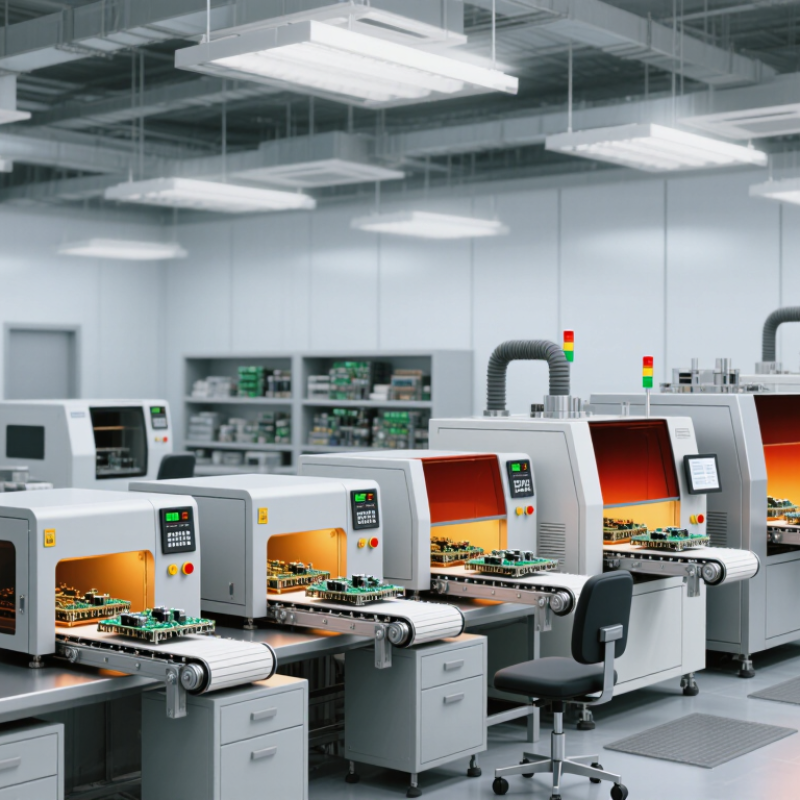
A reflow machine solders surface-mount components to a printed circuit board using controlled heat. It does not place the components; solder paste and accurate placement happen earlier. Heat matters. As the board travels through the machine, its temperature rises in stages. The solder paste softens, melts, and forms joints between component leads and copper pads.
A typical process includes preheating, soaking, peak reflow, and cooling. Preheating limits sudden temperature changes, while soaking helps different areas of the board warm more evenly. During peak reflow, solder briefly becomes liquid and wets the metal surfaces. Cooling then solidifies the joints. Small details matter. Conveyor speed, airflow, and temperature settings can affect results, especially on boards with mixed component sizes.
In practice, technicians check the temperature profile with thermocouples attached to a representative board. A profile that looks neat on screen can still be wrong for a dense assembly. Not quite. Too little heat may leave weak or incomplete joints; excessive heat can stress components or the board. A reflow machine provides control, not a guarantee. Teams still need to verify the process when board design, solder paste, or component mix changes.
Key Factors for Evaluating Reflow Machines in 2026
Choosing a reflow machine starts with the boards you actually build, not the largest output figure on a sales sheet. Compare usable belt width, maximum board clearance, and temperature-zone count against your panel dimensions and daily mix. A wide board with heavy copper may heat differently from a small controller board. Test both if possible.
Profile control matters. Check how easily operators can set ramp, soak, and peak temperatures, then verify results with thermocouples attached to representative boards. Ask for temperature uniformity data across the belt, not just a single center-point reading. The right machine should recover steadily after loading, without forcing rushed conveyor speeds. Small details count.
Also examine exhaust handling, energy use, and access for cleaning fans or replacing filters. A machine that is difficult to maintain can lose uptime, even when its initial profile looks excellent. Request a trial using your solder paste and components, and record defects, cycle time, and power consumption. Be cautious with impressive claims: one successful run is not proof of stable production. Service availability and operator training deserve weight, too. There is no perfect setup; sometimes a simpler machine fits a variable, low-volume line better than a high-capacity system.
Seven Best Reflow Machines for PCB Assembly in 2026
Seven Best Reflow Machines for PCB Assembly in 2026
The seven best reflow machines serve different production needs: compact benchtop ovens, infrared units, hot-air convection ovens, multi-zone lead-free systems, nitrogen-assisted machines, vacuum reflow ovens, and inline conveyor models. Small batches benefit most. A benchtop oven can suit prototypes, while an inline conveyor supports steady production. Infrared heating may warm components unevenly when board surfaces vary, so check temperature readings across the PCB.
For repeatable assembly, convection and multi-zone machines offer closer control over preheat, soak, and peak temperatures. A practical test uses thermocouples attached near a large connector, a small chip, and the board’s edge. Compare the measured profile with the solder paste supplier’s guidance.
A single profile rarely fits every board. That detail is easy to overlook.
Nitrogen-assisted equipment can reduce oxidation during demanding processes, but it adds gas costs and operating checks. Vacuum reflow may help reduce voids in certain solder joints; it is not automatically necessary for ordinary boards.
When comparing machines, review usable board width, zone length, exhaust handling, maintenance access, and profile storage. Ask for a sample run using a representative board. Specifications matter, but actual temperature uniformity can still disappoint.
How the Seven Machines Compare in Performance and Cost
In 2026, the seven best reflow options differ more by workload than by headline speed. Benchtop batch ovens suit prototypes; compact convection models fit short runs. Lead-free multi-zone ovens balance control and volume. Nitrogen systems support oxidation-sensitive assemblies. Vacuum reflow targets void-sensitive joints, while dual-lane and high-throughput inline ovens prioritize output. IPC’s 2024 industry outlook estimated global electronics production at roughly $5.4 trillion. Yet that scale does not mean every factory needs a larger oven.
Compare installed cost, usable boards per hour, energy per board, nitrogen use, maintenance, and scrap. IPC-7530A emphasizes product-specific thermal profiling, so assess measured board profiles—not just the number of heating zones. An inexpensive batch oven can win at low utilization. A costly dual-lane line may reduce labor costs under steady demand. A clean spreadsheet can still mislead. Exact payback depends on product mix, staffing, and actual uptime.
Tips: Run the same test board through each candidate. Record peak temperature, time above liquidus, temperature variation, energy use, and changeover time. Include calibration and filter replacement in annual costs. Your hardest board, not your average board, should guide the decision.
7 Best Reflow Machines for PCB Assembly in 2026
How seven machine classes compare in indicative purchase cost and production fit
Bars show indicative 2026 machine-only price ranges in USD, not quotations for specific models. Benchtop units suit prototyping and low-volume batches; inline, nitrogen-capable, and dual-lane systems are designed for progressively greater production demands. Actual throughput and cost depend on oven configuration, board size, options, and installation.
Matching a Reflow Machine to Production Requirements
Matching a reflow machine to production starts with the board, not the advertised zone count. Measure your widest panel, tallest component, and expected hourly output. Then check whether the conveyor can hold that pace without crowding boards. Thermal mass matters, too: a small control board and a copper-heavy power board may need very different profiles. IPC-7530 recommends profiling the assembly to verify its actual thermal conditions. A preset recipe is only a starting point.
Demand signals can help with planning, but they are not a substitute for a line study. The World Semiconductor Trade Statistics November 2024 forecast projected global semiconductor sales of $627.6 billion in 2024 and $697.2 billion in 2025. That growth suggests continued electronics activity; it does not directly predict your factory’s PCB volume. Match oven capacity to your own mix, shifts, changeovers, and peak demand. More zones are not automatically better. A longer oven can consume floor space and energy if throughput stays low.
Tips: Ask suppliers to run your actual boards and share temperature-profile data across representative components. Check recipe storage, alarm records, exhaust needs, and service access. Fit matters. One easy mistake is choosing for today’s largest batch without checking whether smaller lots can run efficiently. Revisit the choice after a trial; real line constraints can surprise you.
