
The demand for reliable and efficient power supplies is increasing rapidly. According to a recent report by Grand View Research, the global Switching Power Supply market is expected to reach $42.15 billion by 2025. This growth is driven by advancements in technology and the need for higher power efficiency. Switching Power Supply units play a crucial role in various applications, from consumer electronics to industrial machinery.
Choosing the right Switching Power Supply can be challenging. Many options are available, and specifications can be overwhelming. Factors like efficiency ratings, size, and output voltage need careful consideration. Industry experts stress the importance of understanding these elements to prevent potential failures or inefficiencies. A mismatch can lead to underperformance or damage in the long run.
Mistakes can happen, and selecting a power supply isn’t always straightforward. Some users may ignore critical features, leading to frustrating outcomes. It's vital to assess your needs thoroughly and avoid the pitfalls that come from impulse decisions. The right Switching Power Supply can significantly enhance your device's performance and longevity, making this choice fundamental to your technology investments.
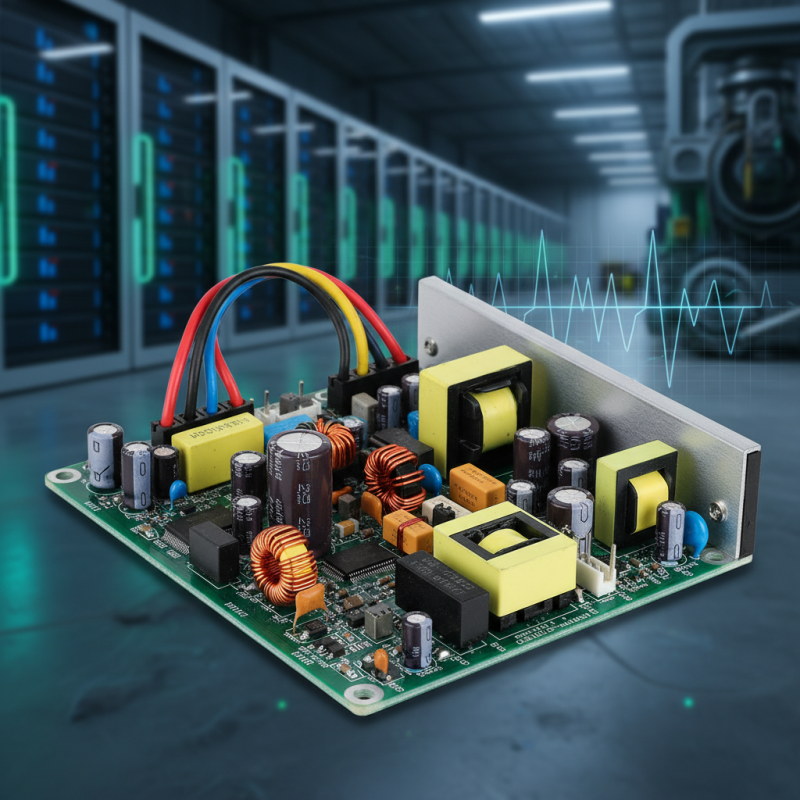
Switching power supplies are essential in many electronic devices. They convert electrical power efficiently, allowing devices to perform well. Understanding their basics helps in choosing the right one.
These power supplies work by switching voltage on and off rapidly. This method generates less heat compared to linear power supplies. The switching frequency can be quite high, which helps in reducing the size of the components. Yet, this complexity introduces noise in the output. It's crucial to consider the effect of electromagnetic interference on sensitive electronics.
Choosing the right switching power supply can be challenging. Different applications require varying outputs. Users often need to balance efficiency against size and cost. Features like voltage regulation and ripple must be kept in mind. A mismatch could lead to performance issues. It's not uncommon to overlook these details, resulting in unexpected failures in projects. A deeper understanding is vital for optimal selection.
When selecting a switching power supply, several key factors come into play. Efficiency is paramount. Reports indicate that high-efficiency models can reach over 90%. This means less energy waste and lower bills. But achieving this rating often requires a balance between power output and design. Not all switches deliver efficiency consistently at all loads. This aspect demands scrutiny.
Another important factor is voltage regulation. A quality power supply should maintain stable voltage despite fluctuations. Inconsistent voltage can harm sensitive electronics. A report from industry experts reveals that nearly 30% of equipment failures stem from poor voltage supply. Selecting a model with excellent load regulation can mitigate such risks.
Noise levels also warrant attention. Power supplies generate electromagnetic interference that can affect other components. Some models are identified as excessively noisy in operation, causing substantial disruption. It's crucial to research specifications and user feedback. Finding that optimal combination of efficiency, stability, and low noise can be challenging but is essential for optimal performance.
Switching power supplies are crucial in many applications today. They are widely used in consumer electronics, telecommunications, and industrial machines. The versatility of these power units makes them a standard choice. According to a recent industry report, the market for switching power supplies is projected to grow at a compound annual growth rate (CAGR) of 5.3% from 2021 to 2026.
In consumer electronics, these power supplies offer efficiency and compact design. Devices like laptops and smartphones rely on them for optimal performance. In telecommunications, the demand for reliable power sources is rising. Switching power supplies help maintain consistent operation in critical systems. However, not all applications handle power fluctuations effectively. This can lead to potential failures and loss of data.
Industrial applications also benefit significantly from switching power supplies. They are essential for automation equipment and robotics. Their performance can directly impact productivity. Yet, designing these units requires careful consideration of thermal management. Overheating can compromise efficiency and lifespan. Ultimately, while switching power supplies offer many advantages, they also present challenges that require ongoing attention.
When selecting a switching power supply, it's vital to understand the different types available. Each type serves specific applications. For instance, buck converters efficiently step down voltage. They are ideal for devices needing lower voltage levels.
Boost converters, on the other hand, increase voltage levels. This feature is useful for battery-operated devices. Yet, they may introduce noise, which can be troublesome in sensitive applications. Understanding the pros and cons is essential.
Additionally, some power supplies offer adjustable output voltages. This flexibility can be beneficial for prototyping and varying load requirements. However, not all supplies provide this feature. It's important to assess your needs carefully. Selecting the right power supply isn't trivial, and each option has unique characteristics that may fit or fail your requirements.
When selecting a switching power supply, efficiency and reliability are paramount. A recent industry report found that over 80% of power drawn is lost as heat in less efficient units. This inefficiency can lead to premature failure and increased operational costs. Understanding power efficiency ratings, like 80 PLUS certification, offers insight into a unit's performance. Aim for a supply with at least an 80 PLUS Bronze rating. This choice ensures 82% efficiency at 20% load and 85% at 100% load.
In addition, considering load regulation is vital. A well-regulated power supply maintains a consistent voltage output, regardless of load changes. Variations can damage sensitive components. Reports indicate that nearly 30% of electrical issues arise from unstable voltage.
Also, it’s crucial to review the thermal management of the power supply. Poor cooling can reduce efficiency. A design flaw with inadequate airflow may lead to thermal throttling. This issue can degrade performance over time. Many users overlook this aspect, only realizing its importance after experiencing failures. Additionally, always check for reviews and feedback, as these can provide valuable insights.
Investing time in these considerations pays off in longevity and cost savings.
| Power Output (W) | Efficiency (%) | Form Factor | Cooling Type | Protection Features |
|---|---|---|---|---|
| 400 | 85 | ATX | Active | Over Voltage, Over Current |
| 600 | 88 | SFX | Passive | Short Circuit, Over Temperature |
| 800 | 90 | Full Tower | Active | Over Voltage, Over Current, No Load |
| 1200 | 92 | Modular | Active | Over Voltage, Short Circuit, Surge |
| 1500 | 93 | ATX | Active | Over Current, Over Temperature, Short Circuit |
