
The 2026 Best Wine Storage Fridge for Global Buyers? This question needs more than a capacity chart. Wine demand is changing, while household storage expectations are becoming more practical. The International Organisation of Vine and Wine reported global wine consumption at approximately 221 million hectolitres in 2023, the lowest level in 27 years. That decline does not remove the need for careful storage. It makes purchasing decisions more selective.
A reliable Wine Storage Fridge should protect bottles from heat, light, vibration, and unstable temperatures. Most wines benefit from a stable environment near 12–14°C, although serving temperatures vary by style. The ideal unit should also provide a tight door seal, adjustable shelves, low vibration, and clear temperature controls. Small details matter. A warm kitchen corner can damage long-term consistency. A blue LED can still be too bright.
This guide compares models for different climates, budgets, bottle formats, and electrical standards. Energy use also deserves attention. ENERGY STAR states that certified refrigerators generally use at least 10% less energy than models meeting minimum federal requirements. However, certification systems differ between markets. Buyers should check voltage, frequency, plug type, refrigerant standards, and local service coverage.
The Silicon Valley Bank State of the Wine Industry Report 2024 highlighted pressure across several wine market segments. That pressure may encourage buyers to protect fewer, better-selected bottles. Still, product specifications can be incomplete or optimistic. Real-world noise, shelf strength, and temperature recovery deserve independent checking. No single fridge suits every cellar, and that is the uncomfortable truth.
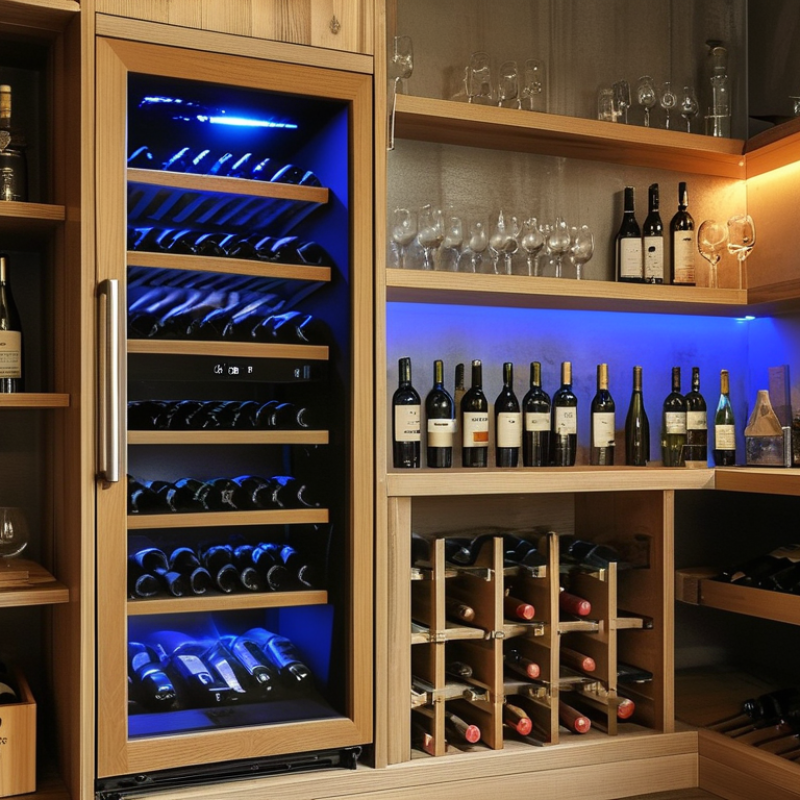
2026 Best Wine Storage Fridge for Global Buyers?
For global buyers, a wine storage fridge must do more than look elegant. It should maintain stable temperatures despite seasonal changes and frequent door opening.
A useful range is usually 10–14°C, depending on the wines stored. Humidity also matters, especially for cork-sealed bottles. In dry rooms, a reliable humidity design can reduce cork shrinkage.
UV-resistant glass protects labels and delicate aromas. Low vibration helps sediment settle naturally.
Power compatibility is often overlooked. Buyers should check voltage, frequency, plug type, and local service support before ordering.
A unit designed for one climate may struggle in a hot, humid home. Energy efficiency matters too, but the lowest rated consumption may not suit every installation.
In practical cellar checks, ventilation clearance has repeatedly affected performance. Small spaces can create warm cabinet sides. That detail is easy to miss.
Tips:
Measure the niche, door swing, and bottle depth first. Test the temperature with an independent thermometer.
Ask about replacement parts and warranty handling in your region. Do not trust capacity claims blindly; large bottles reduce usable storage.
I have found that mixed bottle shapes expose weak shelving designs quickly. A perfect specification still cannot replace careful installation and realistic storage habits.
Choosing the best wine storage fridge in 2026 starts with temperature zones, not the largest advertised capacity. The OIV’s State of the World Vine and Wine Sector 2024 estimated global wine consumption at 214.2 million hectolitres in 2024. That market includes sparkling, white, rosé, and red wines requiring different serving conditions. A dual-zone fridge is more flexible, but stable temperature matters more than a dramatic display.
For long-term storage, many specialists recommend approximately 10–15°C, with minimal fluctuation. A serving zone may run cooler, around 5–12°C, depending on style. Check the control range and temperature recovery after opening the door. Some models show two temperatures but share one cooling circuit. That can reduce real-world separation. Measure the shelves. Test it loaded.
Capacity labels can mislead. Manufacturers usually count standard 750-millilitre Bordeaux bottles, arranged tightly. Burgundy, Champagne, magnum, and some natural-shaped bottles occupy more space. In practice, a stated 50-bottle cabinet may hold closer to 35–42 mixed bottles. The IWSR’s Global Trends in Wine 2024 report highlights continuing diversity in wine choices, making bottle compatibility increasingly important. Look for removable shelves, adjustable spacing, and a door that closes without pressing corks or glass. I have found capacity estimates fail most often with wider bottles. That is a small flaw, but an expensive one when planning a collection.
2026 Best Wine Storage Fridge for Global Buyers?
Choosing a wine fridge starts with stability, not a flashy display. The OIV’s 2024 report recorded global wine consumption at about 221 million hectolitres in 2023. That volume reflects a diverse storage market, from casual collectors to serious cellars. A reliable unit should hold roughly 10–15°C with minimal daily fluctuation. Compressor cooling suits warm rooms and larger cabinets. Thermoelectric cooling is quieter, but performance can weaken in hot climates. That difference matters for buyers in tropical regions.
Humidity needs equal attention. A practical target is 50–70% relative humidity, while preventing condensation around labels and corks. ASHRAE’s HVAC guidance supports stable environmental control, but household wine fridges often oversimplify humidity management. Look for insulated doors, a dependable seal, adjustable shelves, and a low-vibration compressor. Dual-zone storage can help separate serving temperatures, yet two zones may reduce usable capacity and increase energy use. Energy performance should be checked against the buyer’s local efficiency label, not only the product brochure.
Tips: Place the fridge away from ovens and direct sunlight. Leave ventilation clearance. Use a separate hygrometer. Check temperature recovery after door opening. A digital reading is useful, but not perfect. Shelves should glide smoothly and support heavy bottles without forcing the door. I would also question built-in water trays; they may raise humidity unevenly. Wine storage advice is rarely universal. Room climate, bottle turnover, and maintenance habits can change the right choice.
Choosing the best wine storage fridge for global buyers starts with measurable performance, not glossy claims. Check annual energy consumption in kilowatt-hours, then compare it with local electricity prices. An efficient cabinet should maintain stable temperatures without running loudly all night. Look for insulated doors, efficient compressors, and clear temperature controls. Small details matter. A warm kitchen can expose weak insulation quickly. I once underestimated door-opening frequency; actual energy use was higher than the label suggested.
Safety deserves equal attention. Confirm that the fridge carries the required electrical certification for your destination market. Plugs, voltage, frequency, grounding, and fire-protection requirements can differ between regions. Do not rely on an overseas rating alone. Ask for test reports, manuals, and warranty conditions in your language. A stable shelf prevents bottles from sliding when the door closes. Check child-safe settings, tempered glass, and airflow around the rear panel. These features are practical, not decorative.
Noise is often missed in showrooms. A listed decibel figure helps, but measurement conditions may vary. Place the fridge beside a bedroom, and compressor cycling becomes noticeable. For apartments, target quiet operation and review independent user measurements when available. Regional climate also matters. A unit designed for mild rooms may struggle in tropical heat or unheated winter spaces. Leave ventilation clearance exactly as instructed. Standards change, and documentation can be incomplete. That uncertainty deserves a second check before purchase.
Choosing the best wine storage fridge starts with the buyer, not the bottle count. An occasional drinker may need a compact single-zone cabinet for 20 to 30 bottles. Look for adjustable shelves, quiet operation, and a temperature range near 10 to 15°C. Measure twice. A collector needs steadier conditions, stronger UV protection, and shelves supporting mixed bottle shapes. Some large models waste space when bottles sit loosely. Easy mistake.
For restaurants, rental properties, or importers, capacity is only one part of the decision. Check local voltage, frequency, plug type, ventilation clearance, safety certification, and repair coverage before ordering. A cabinet rated for one market may perform poorly elsewhere. Read the manual. Warm kitchens need stronger heat management, while small apartments need low noise and a reversible door. Humidity also deserves attention, because many wine fridges cool well but do not actively control moisture. Do not confuse a digital display with laboratory accuracy. Use a separate thermometer during the first week.
Reliable buying evidence includes measured noise, recovery time after door opening, shelf dimensions, and energy use. Ask sellers for internal measurements, service contacts, and warranty terms in writing. Photos can hide shallow shelves or a door that cannot open fully against a wall. Test the fit. Buyers may also overlook future bottle sizes, cleaning access, or seasonal room temperatures. A smaller cabinet can be wiser than unused capacity. My own preference would be stable temperature over decorative lighting, although that choice may disappoint buyers furnishing an open kitchen.
| Buyer Need | Typical Capacity | Recommended Temperature Setup | Best Cabinet Features | Installation Advice | Important Buying Checks |
|---|---|---|---|---|---|
| Small household or apartment | 12–30 standard 750 ml bottles | One zone, approximately 10–14°C for mixed long-term storage | Compact footprint, adjustable shelves, interior light, reversible door if available | Leave ventilation clearance around the cabinet; avoid direct sunlight and heat-producing appliances | Exterior dimensions, noise level, door swing, plug type, voltage, and usable rather than advertised capacity |
| Mixed collection of red and white wines | 30–80 bottles | Dual zone; commonly about 8–12°C for whites and 12–18°C for reds, depending on serving preference | Independent digital controls, stable airflow, removable shelves, low-vibration operation | Freestanding models are easier to place; built-in models require specified front ventilation | Actual temperature range in each zone, zone separation, shelf spacing, and recovery time after door opening |
| Long-term aging collection | 50–150 bottles | Stable single zone around 12–14°C is generally suitable for aging most wines | Consistent temperature, humidity management, UV-resistant glass, charcoal or odor filtration, vibration reduction | Place in a temperature-stable indoor room away from radiators, ovens, windows, and strong vibration | Temperature stability, alarm functions, replacement filter availability, door seal quality, and shelf load rating |
| Frequent entertaining and serving | 40–100 bottles | Two zones or a dedicated serving zone; whites are usually served cooler than reds | Pull-out shelves, clear labeling, bright but low-heat lighting, wide door opening, quick-access layout | Allow enough front clearance for shelves and door movement; keep the unit level | Shelf ergonomics, bottle visibility, door lock, noise rating, and ease of cleaning spills |
| Large private cellar or hospitality use | 100–300+ bottles | Single-zone aging storage or multiple independently controlled zones | High-capacity compressor system, strong insulation, commercial-grade hinges, lockable door, serviceable components | Confirm floor loading, dedicated electrical requirements, ventilation, delivery access, and service support | Rated energy consumption, warranty coverage, spare parts, compressor type, temperature alarms, and maintenance access |
| Built-in kitchen installation | 24–80 bottles | One or two zones according to the collection and serving plan | Front ventilation, flush-fitting design, adjustable feet, integrated handle, concealed controls | Follow the installation manual exactly; do not block front or rear ventilation openings | Cutout dimensions, ventilation path, hinge configuration, electrical outlet position, and installation certification |
| Hot or humid climate | 30–150 bottles | Stable storage setting around 12–14°C; confirm the appliance’s rated ambient operating range | Efficient insulation, reliable compressor cooling, door-open alarm, anti-condensation design, moisture-resistant materials | Keep away from outdoor heat, damp walls, and direct solar radiation; provide adequate airflow | Climate class, ambient-temperature limit, energy use in local conditions, condensation control, and voltage compatibility |
| Energy-conscious buyer | 20–120 bottles | Use the narrowest practical temperature range and avoid unnecessary zone separation | Thick insulation, efficient compressor, low-emissivity glass, automatic lighting, sleep or eco mode | Place in a cool indoor location with sufficient ventilation to reduce cooling workload | Regional energy label, annual kWh rating, standby consumption, refrigerant information, and repairability |
